Uzbekistan Tour
(7 Days 6 Nights)
Embarking on an Exploration of Uzbekistan: A Journey Through Nature’s Marvels.
Uzbekistan is a land shaped by Silk Road trade, Islamic architecture, powerful empires, and remarkable scientific discoveries. Your journey begins in the capital, Tashkent, where modern culture meets history at Independence Square, Amir Temur Square, the Alisher Navoi Bolshoi Theatre, and the Monument of Courage. Beyond Tashkent, you’ll pause at Teshiktosh at the mountain pass and admire nature at the Chimgan Mountains and Charvak Reservoir. The tour continues to Shahrisabz for the Mausoleum of Jakhongir within the Dor-us Saodat Complex, the remains of Ak Saray Palace, and Kok Gumbaz Mosque. In Bukhara, you’ll explore Lyabi-Khauz, Chor-Minor, Kalyan Minaret, the Ark Fortress, and its historical trade domes. Samarkand then reveals masterpieces of world heritage — Registan Square, Gur-Emir Mausoleum, Bibi-Khanum Mosque, Siab Bazaar, Shakhi-Zinda, Khazrat Khizr Mosque, and the Ulughbek Observatory. Finally, the experience concludes at the Meros paper mill in Konigil, where ancient papermaking traditions are still preserved.
01.
Khast Imam Complex
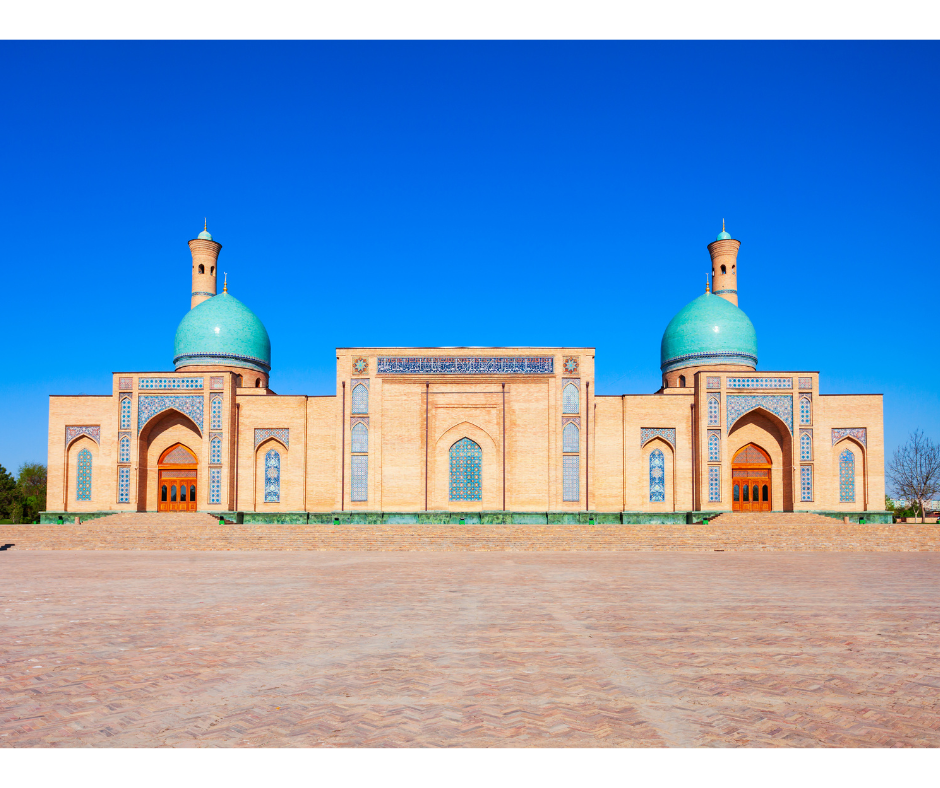
The Khast Imam Complex is one of Tashkent’s most sacred religious and cultural sites, known as the heart of Islamic spirituality in Uzbekistan. Here, visitors can explore a peaceful square surrounded by exquisite mosques, madrasahs, and mausoleums dating back centuries. The highlight of the complex is the Muyi Muborak Madrasah, home to what is believed to be the world’s oldest Quran — the 7th-century Uthman Quran, written on deerskin. The architecture is breathtaking, featuring turquoise domes, carved wooden doors, and beautifully tiled facades that represent Uzbekistan’s Silk Road heritage. Travelers can enjoy a calm atmosphere perfect for reflection, photos, and learning about how Islam shaped Central Asian history. Visiting Khast Imam gives a deeper appreciation of Tashkent’s faith, history, and craftsmanship.
01.
Ulughbek Observatory
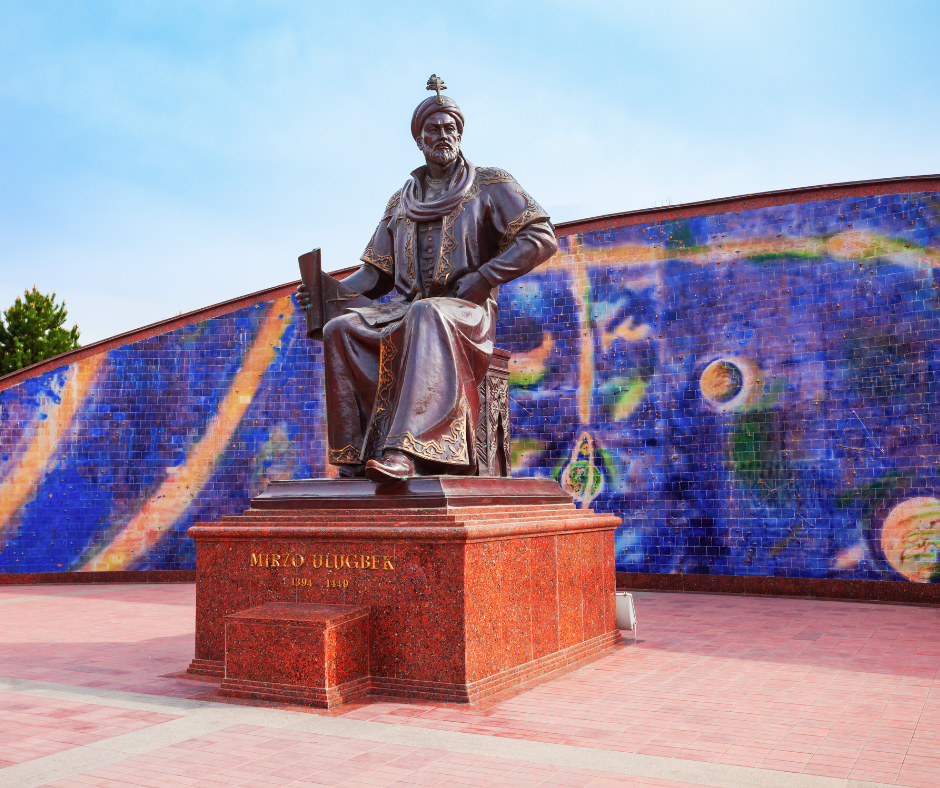
Located in Samarkand, Ulughbek Observatory is one of the world’s most important medieval astronomical sites. Built in the 15th century by Ulughbek — a scholar-king and astronomer — it once housed the most advanced instruments of its time. Visitors can explore the remains of the giant sextant used to measure stars and planets with remarkable accuracy. A small museum nearby displays ancient astronomical tools and maps. This stop highlights Uzbekistan’s surprising scientific history and how knowledge flourished during the Timurid era.
02.
Chimgan Mountains – Western Tien-Shan & Charvak Reservoir
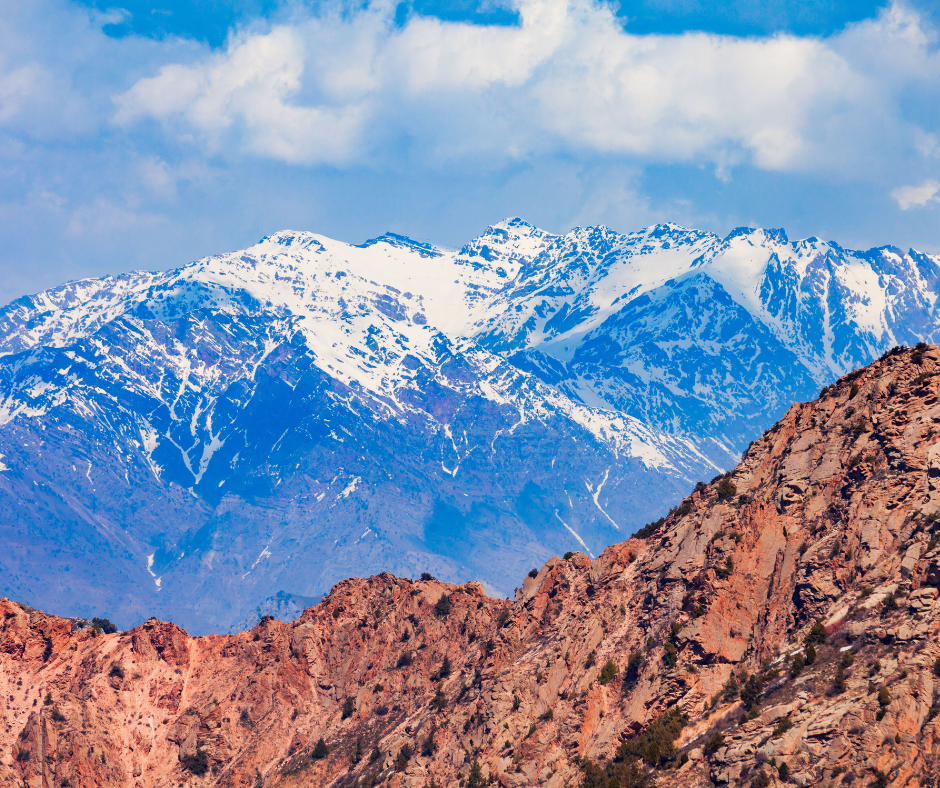
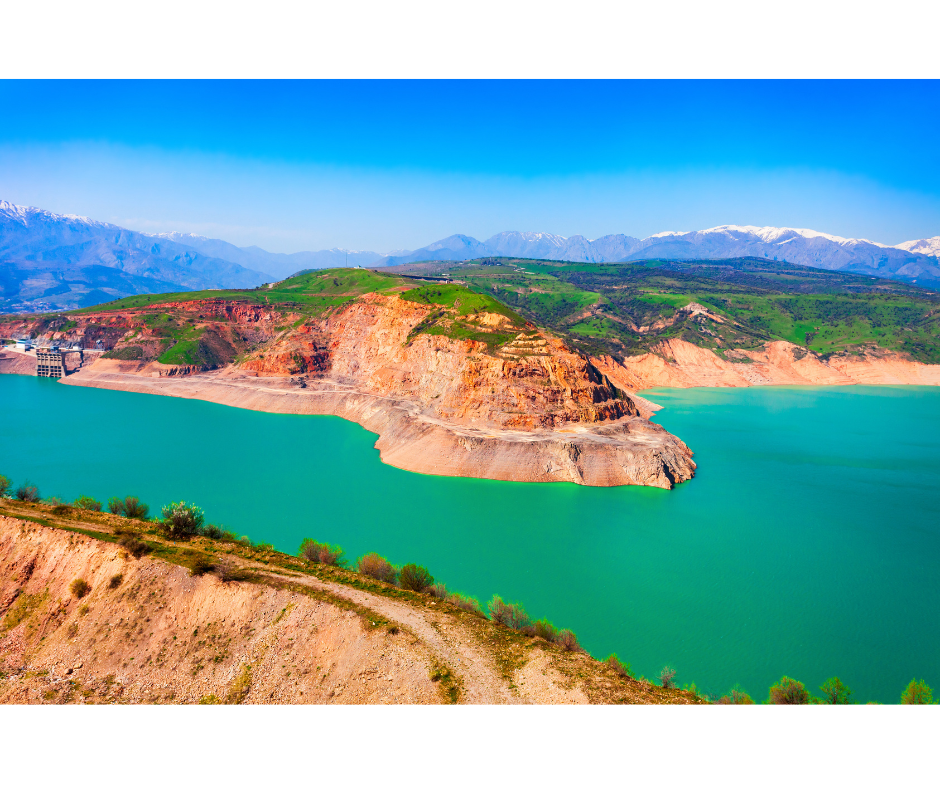
The Chimgan Mountains offer a refreshing escape into nature with cool air, green slopes, and panoramic peaks — often called the “Uzbek Switzerland.” Visitors can enjoy light walking, cable-car rides, or simply admire the landscapes. Afterward, the journey continues to Charvak Reservoir, a bright turquoise lake surrounded by mountains. The peaceful scenery makes it a popular spot for photos, picnics, and relaxing. Together, Chimgan and Charvak deliver a perfect balance of mountain adventure and lakeside tranquility.
23.
Khast Imam Complex
The Khast Imam Complex is one of Tashkent’s most sacred religious and cultural sites, known as the heart of Islamic spirituality in Uzbekistan. Here, visitors can explore a peaceful square surrounded by exquisite mosques, madrasahs, and mausoleums dating back centuries. The highlight of the complex is the Muyi Muborak Madrasah, home to what is believed to be the world’s oldest Quran — the 7th-century Uthman Quran, written on deerskin. The architecture is breathtaking, featuring turquoise domes, carved wooden doors, and beautifully tiled facades that represent Uzbekistan’s Silk Road heritage. Travelers can enjoy a calm atmosphere perfect for reflection, photos, and learning about how Islam shaped Central Asian history. Visiting Khast Imam gives a deeper appreciation of Tashkent’s faith, history, and craftsmanship.
02.
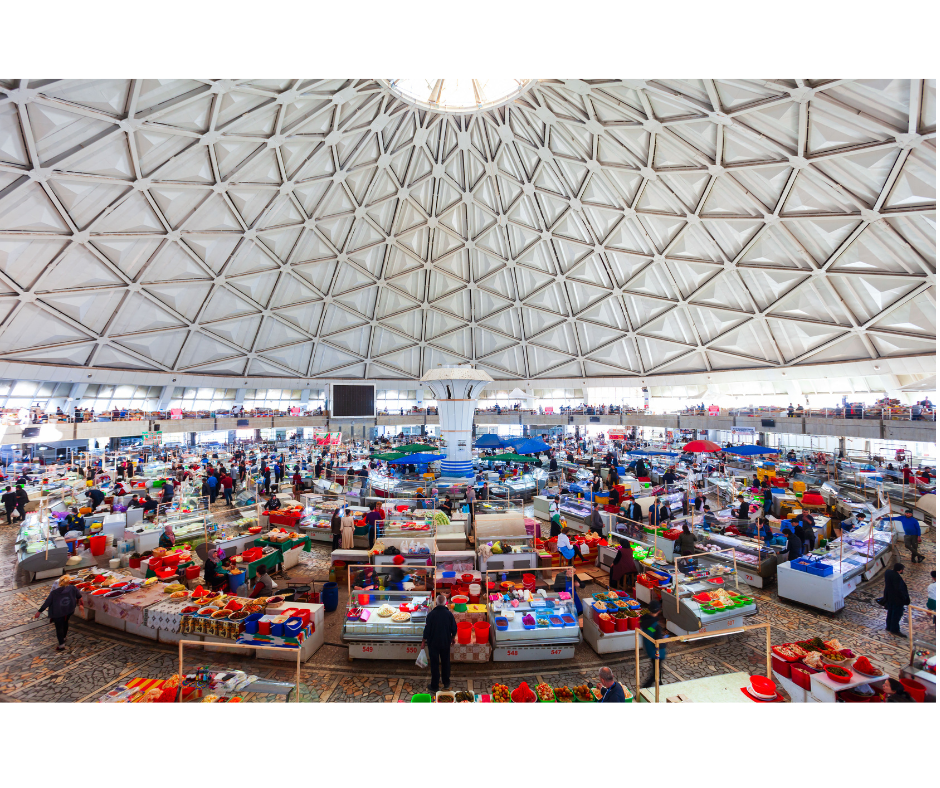
Chorsu Bazaar
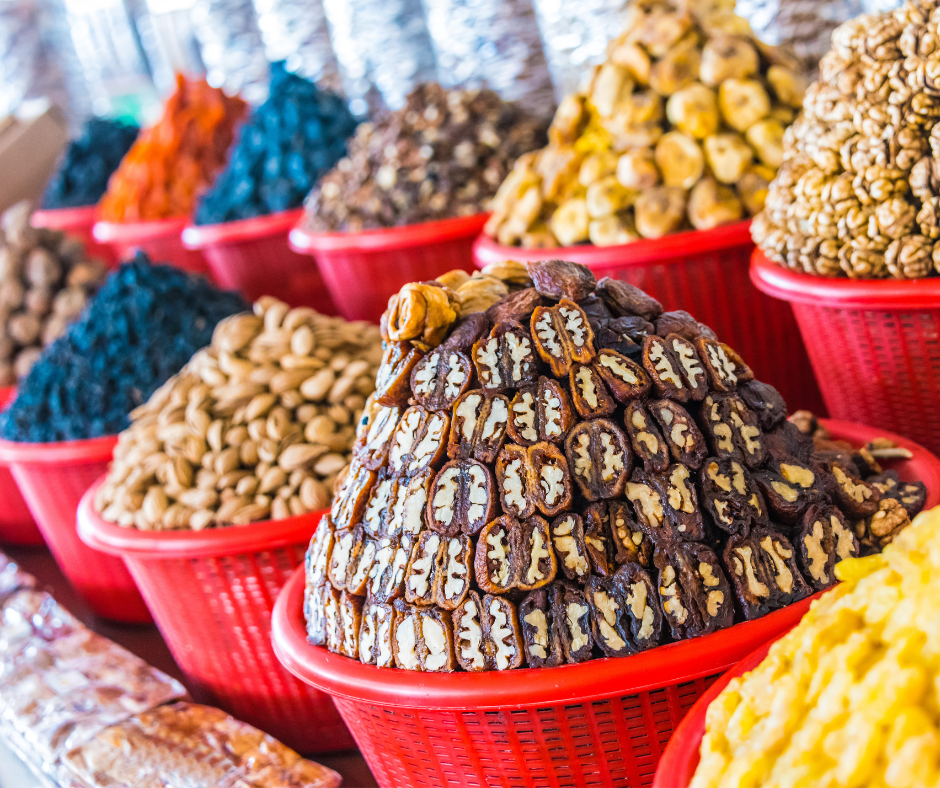
Chorsu Bazaar is one of the most vibrant markets in Central Asia, offering a lively taste of Uzbek daily life. Located beneath a massive green-blue domed roof, this historic bazaar is where locals come to buy spices, fruits, nuts, bread, traditional sweets, and fresh produce. Travelers can wander through colorful stalls, watch bakers preparing tandoor bread, and sample dried apricots, pistachios, and halva. It’s also a great place to shop for souvenirs including hand-embroidered textiles, ceramics, hats, and scarves. The atmosphere is energetic and authentic, filled with the sounds of bargaining and friendly greetings. A visit to Chorsu Bazaar is more than just shopping — it’s an unforgettable cultural experience where tourists see, smell, taste, and feel the true spirit of everyday Uzbek life.
03.
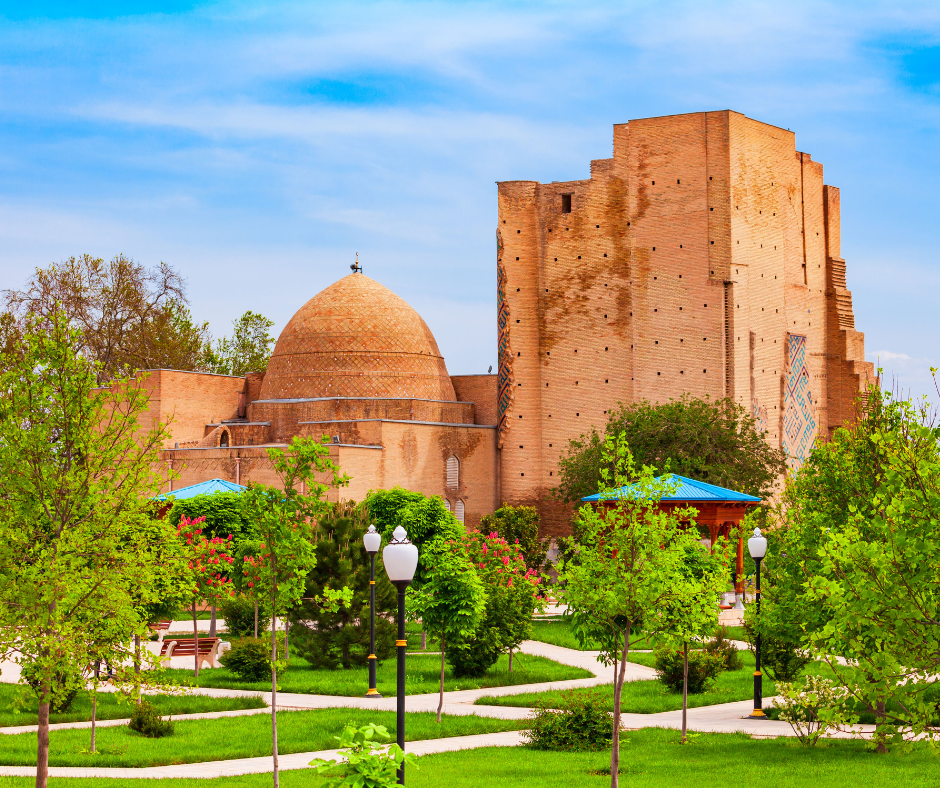
Mausoleum of Jakhongir – Dor-us Saodat Memorial Complex, and Ak Saray Palace & Kok Gumbaz Mosque
In Shahrisabz, this heritage area showcases powerful Timurid history. The Mausoleum of Jakhongir stands within the Dor-us Saodat Complex, built by Emperor Amir Timur in memory of his beloved son, reflecting deep royal emotions and exquisite architectural style. Nearby are the remains of Ak Saray Palace — once Timur’s grand white palace — where its towering gateway still impresses visitors. The Kok Gumbaz Mosque, known as the “Blue Dome”, adds spiritual calm and beauty, making this complex a meaningful stop for history and architecture lovers.
04.
Teshiktosh (Stone with Hole)
Teshiktosh is a unique natural rock formation located at the top of a scenic mountain pass. The stone features a naturally carved hole, believed by locals to bring luck and blessings when you walk through or touch it. The viewpoint offers refreshing mountain air and stunning views of the surrounding valleys. It is a short but meaningful stop, where you can also browse a tiny local market nearby selling dried fruits, nuts, and small souvenirs — a chance to taste a bit of local culture before continuing the journey.
05.
Chor-Minor Madrasah
Chor-Minor is one of Bukhara’s most charming landmarks, instantly recognizable for its four blue-domed towers. The name means “Four Minarets,” though interestingly, these towers are decorative and not functional minarets. Built in the 19th century by a wealthy merchant, the structure once served as the entrance to a larger madrasah complex. Each tower features unique decorations — believed to reflect different cultures that traveled the Silk Road. Tourists love Chor-Minor because of its fairy-tale appearance and peaceful courtyard setting, perfect for taking photos. Small souvenir stalls around the site allow visitors to shop for handmade crafts, hats, and embroidery. A short visit here completes the Bukhara historical experience with a touch of architectural charm and lighthearted beauty.
06.
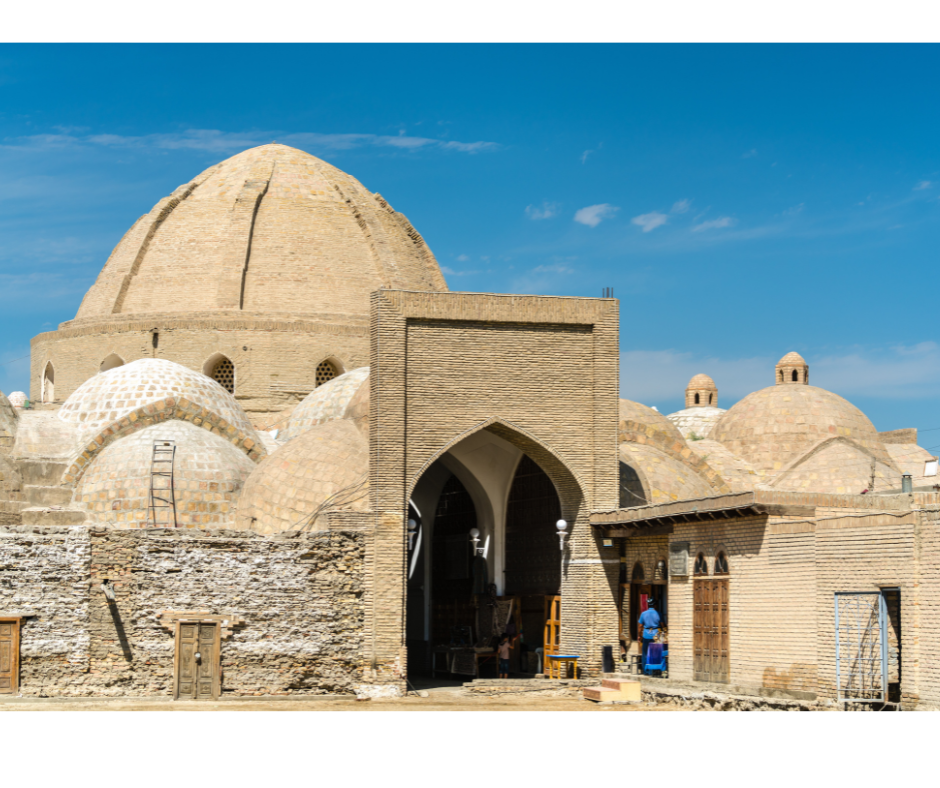
Trade Domes
Bukhara’s ancient Trade Domes are a living reminder that this city was once one of the Silk Road’s busiest commercial centers. These massive stone-arched markets — Toki-Zargaron, Toki-Telpakfurushon, and Toki-Sarrafon — once hosted jewelers, hat-makers, silk traders, and money-changers. Today, they remain atmospheric indoor bazaars where tourists can wander through cool vaulted halls filled with handicrafts such as silk scarves, carpets, ceramic plates, and miniature paintings. The domes are not just places to shop — they are pieces of history, showing how medieval merchants used architecture to protect goods from heat and sand while welcoming caravans from distant lands. Walking through these tunnels feels like stepping back into Silk Road times, where cultures and treasures from Asia and Persia met.
07.
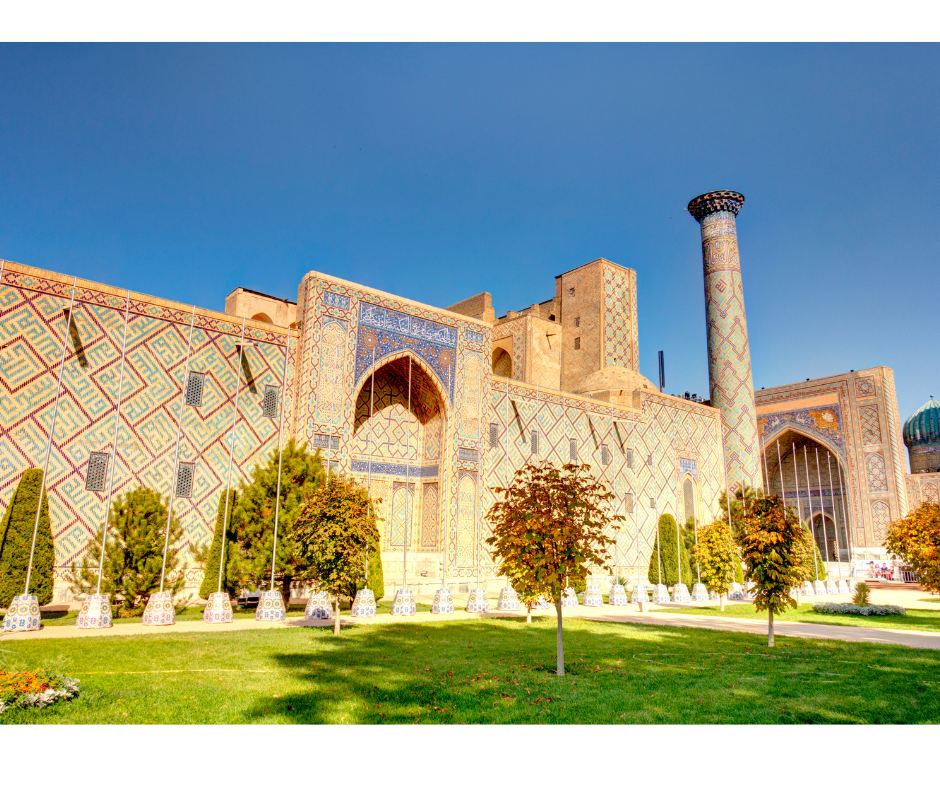
Ulugbek & Abdulazizkhan Madrasahs
Standing opposite each other, these twin madrasahs form one of the most striking architectural ensembles in Bukhara. The Ulugbek Madrasah — built by the famous astronomer-king Ulughbek in 1417 — emphasizes learning and science, reflecting his passion for astronomy and mathematics. Across the square, Abdulazizkhan Madrasah, built in the 17th century, is grander and richly decorated with tiled mosaics, floral patterns, and carved ceilings. Together, they symbolize the harmony of intellect and artistry in Uzbek culture. Visitors can wander through courtyards, peek into old student cells, and browse handicraft stalls now occupying former classrooms. A visit here helps tourists understand how Islamic scholarship once flourished, shaping Central Asia into a great center of knowledge.
08.
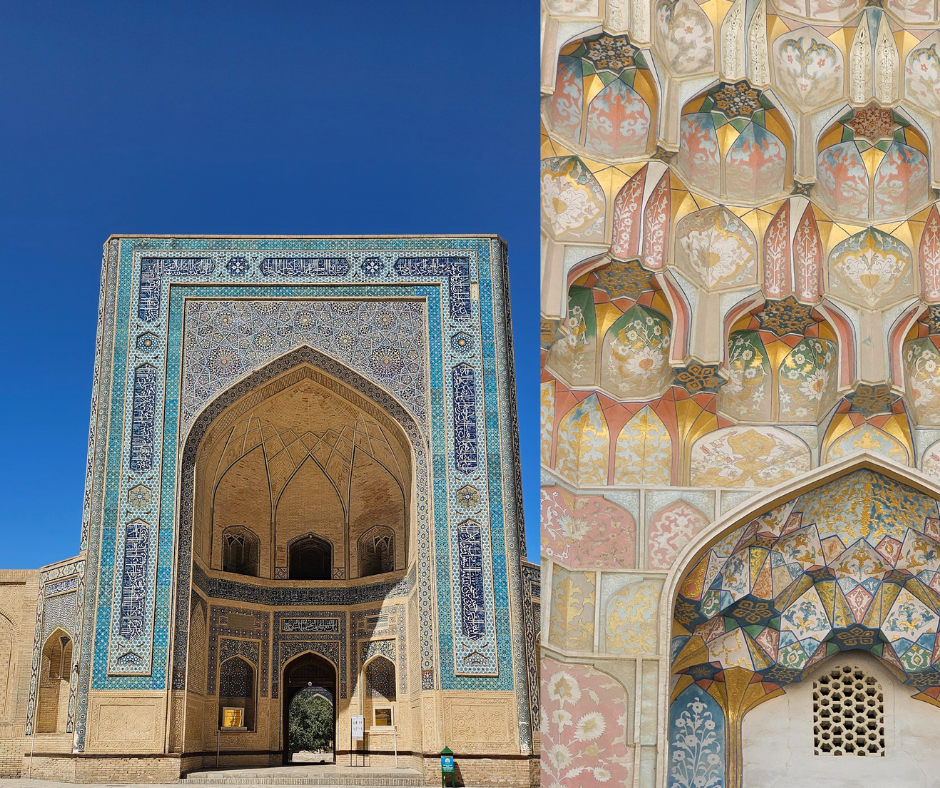
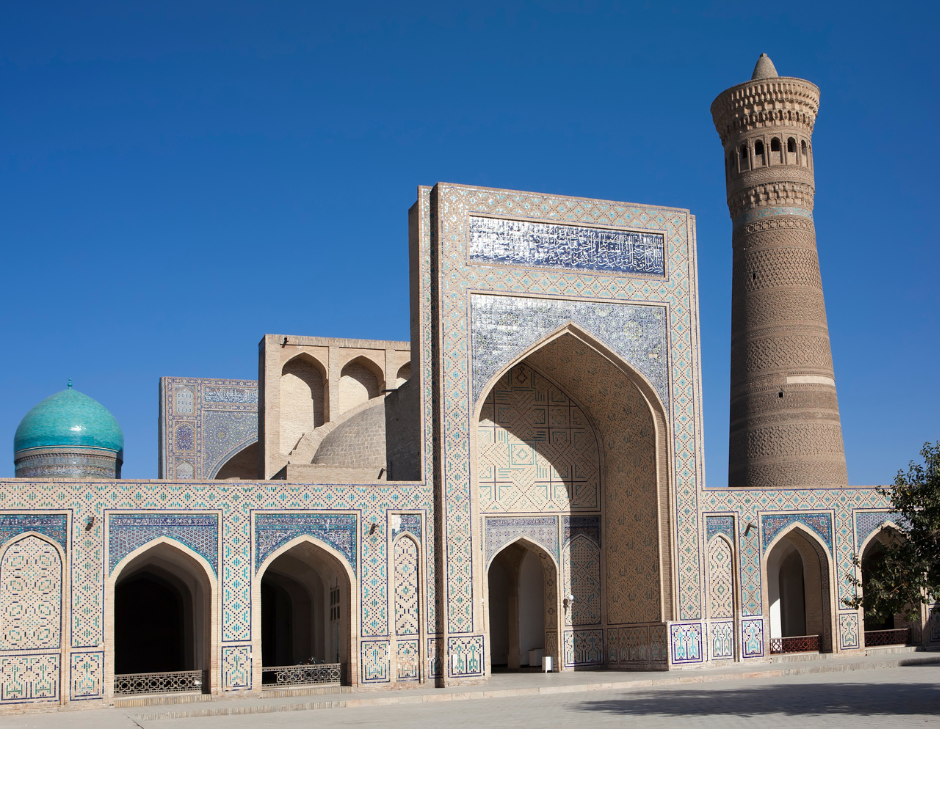
Miri-Arab Madrasah, Kalyan Minaret, Kalyan Mosque
This trio forms the most iconic skyline in Bukhara — especially stunning at sunset. The Miri-Arab Madrasah is still an active Islamic school, so its interior is closed, but its majestic tiled facade is a beautiful photo stop. Next to it rises the Kalyan Minaret — a towering 46-meter structure from the 12th century that once guided caravans and called worshippers to prayer. Known as the “Tower of Death,” legend says criminals were once thrown from its top. The Kalyan Mosque opposite can hold up to 12,000 worshippers in a vast courtyard supported by carved pillars and archways. Together, these monuments offer a breathtaking example of Central Asia’s Islamic engineering and spiritual devotion.
09.
Ark Fortress & Bolo-Khauz Mosque
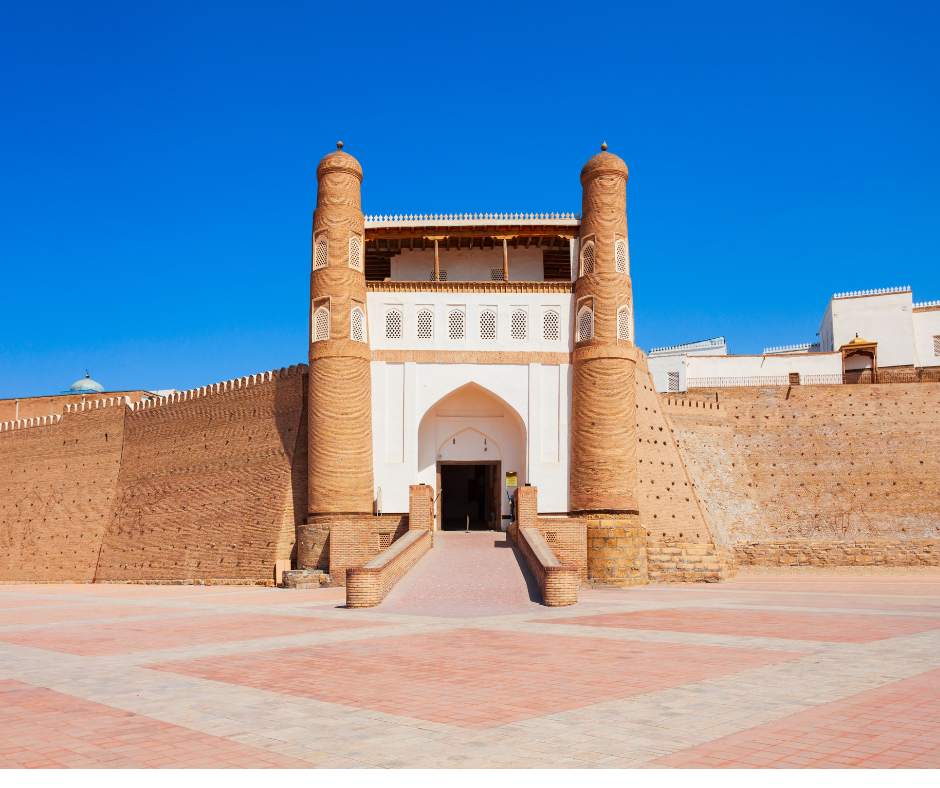
The Ark Fortress is the ancient royal citadel of Bukhara, home to emirs, rulers, and scholars for nearly 1,500 years. Visitors can enter through its dramatic gate and explore courtyards, throne rooms, museums, and viewing platforms that overlook the old city. Just across the road stands the elegant Bolo-Khauz Mosque, known for its carved wooden columns and peaceful pool. Built in the 18th century, it served as the Friday Mosque for the ruling elite. The reflection of its tall wooden pillars in the water makes it one of the most photogenic places in Bukhara. Visiting these two sites together gives tourists a complete sense of power, religion, and daily life during Bukhara’s royal era.
10.
Gur-Emir Mausoleum
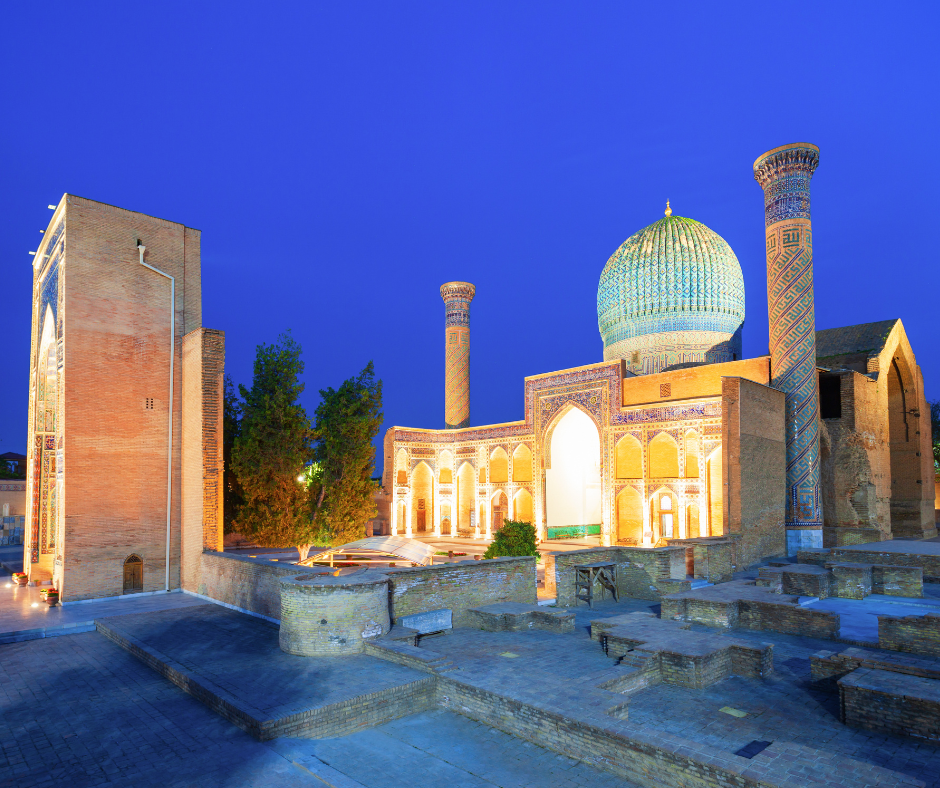
Gur-Emir is the majestic resting place of Amir Temur (Tamerlane), one of the world’s greatest conquerors. Its shimmering blue dome is one of Uzbekistan’s most iconic symbols. Inside, visitors find a calm chamber filled with marble and jade cenotaphs illuminated by soft light. According to legend, opening Temur’s tomb in 1941 triggered bad fortune — coinciding with the start of World War II, adding mystery to the site. Gur-Emir is more than a tomb — it is a monument of power, art, and Central Asian pride. Travelers who appreciate history will feel deeply connected here, standing face-to-face with the legacy of the man who shaped an empire stretching from India to Turkey.
11.
Registan Square
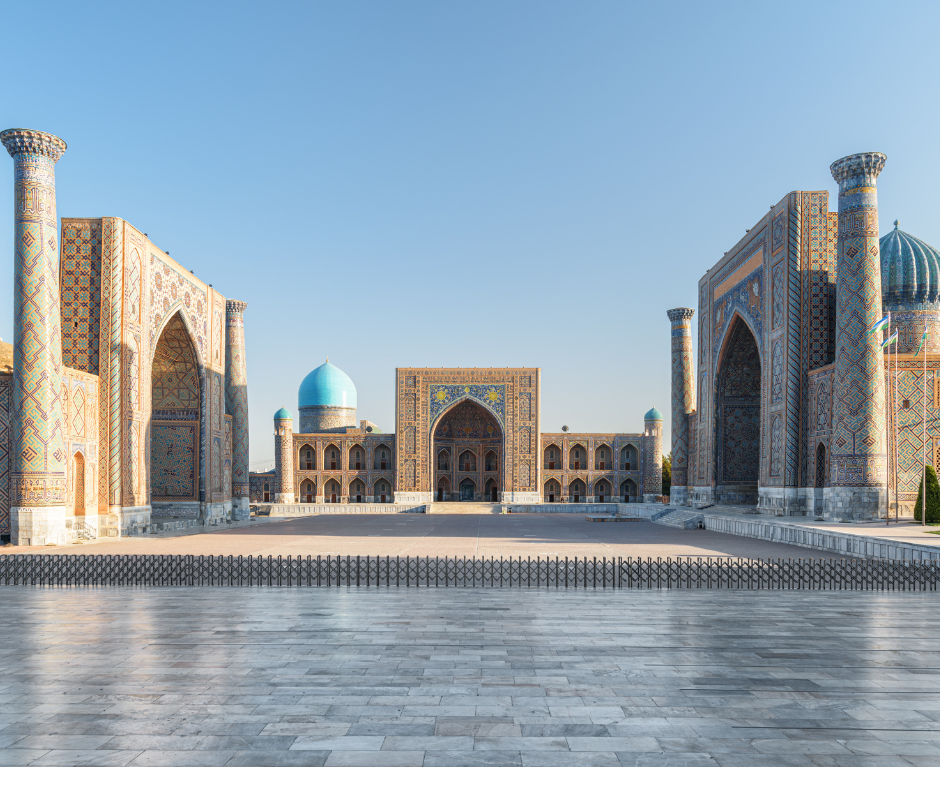
Registan Square is the most famous landmark in Uzbekistan — often called the “Pearl of Central Asia.” Three grand madrasahs, each decorated with dazzling blue mosaic tiles and geometric patterns, frame this massive square. Once a public gathering place for festivals and royal proclamations, today it is a spectacular symbol of Samarkand’s golden age. At night, the square glows under colorful lights, making it a magical place for photos and cultural performances. Visitors can enter the madrasahs to explore courtyards, tiny student rooms, and shops selling handicrafts. Standing here gives tourists a sense of awe — imagining scholars, poets, and traders who once filled this square during the Silk Road era. It is a highlight no traveler should miss.
12.
Bibi-Khanum Mosque
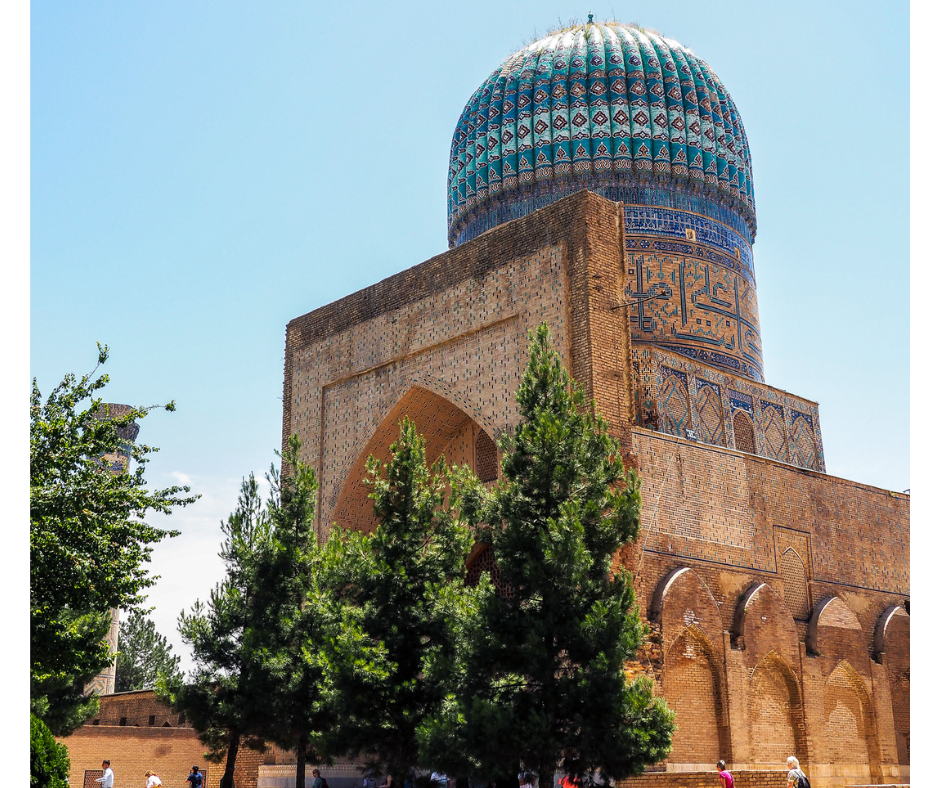
Bibi-Khanum Mosque was once one of the largest mosques in the Islamic world, built by Amir Temur after returning from a victorious campaign in India. Dedicated to his beloved wife, Bibi-Khanum, the mosque became a symbol of love, ambition, and imperial power. Though partially ruined by time and earthquakes, its immense gates, tall minarets, and glittering blue dome still inspire awe. Visitors walking through its courtyard can imagine the grand ceremonies and thousands of worshippers it once hosted. Legend says Bibi-Khanum’s kiss from an architect caused Temur’s jealousy — giving the site a romantic tale that adds charm to its historical significance.
13.
Siab Bazaar
Siab Bazaar is the perfect place to experience Samarkand’s flavors and hospitality. This bustling open-air market is where locals buy daily food — from fresh fruits and vegetables to spices, nuts, honey, and pastries. Tourists love tasting local specialties like samsa, dried figs, and traditional silk-road sweets. Beyond food, visitors can browse handicrafts, ceramics, and embroidered items ideal as souvenirs. The lively atmosphere, friendly vendors, and rainbow-colored displays make Siab Bazaar a fun stop to see authentic Uzbek life. A visit here completes any Samarkand trip with delicious memories and local interactions.
14.
Khazrat Khizr Mosque
Khazrat Khizr Mosque holds great spiritual and historical importance as the first mosque in Samarkand, standing on a hill overlooking the city. Its terrace offers one of the best panoramic photo spots of Registan and Samarkand’s skyline. Inside, visitors find exquisite wooden carvings, colorful paintings, and peaceful prayer halls that make this mosque truly calming. Many people visit not only for worship but also to feel its spiritual atmosphere. Next to the mosque is the mausoleum of Islam Karimov — the first President of Uzbekistan — which adds modern national significance to this sacred site.
15.
Mausoleum of the First President Islam Karimov
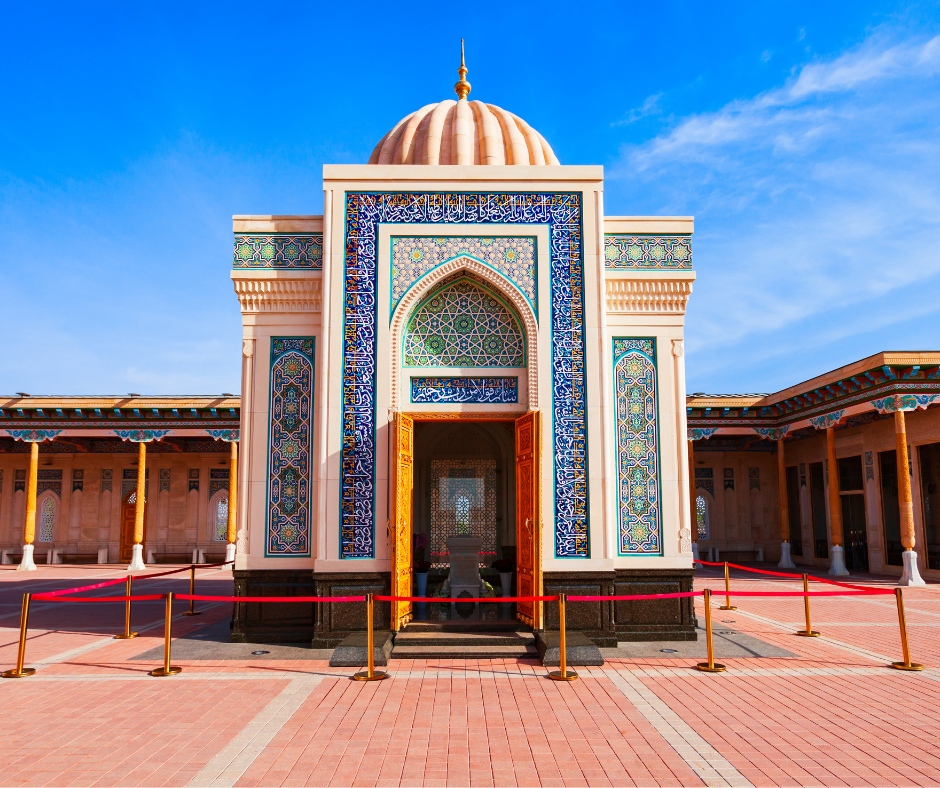
This mausoleum honors Islam Karimov, the founding President of independent Uzbekistan. Built beside Khazrat Khizr Mosque, the mausoleum features a white marble interior, carved stone details, and gold decorations symbolizing purity and legacy. Visitors come to pay respects and reflect on the country’s modern history — how Uzbekistan emerged after the Soviet era. It is a quiet, respectful stop that blends spiritual and national pride, offering insight into the nation’s transformation.
16.
Shakhi-Zinda Necropolis
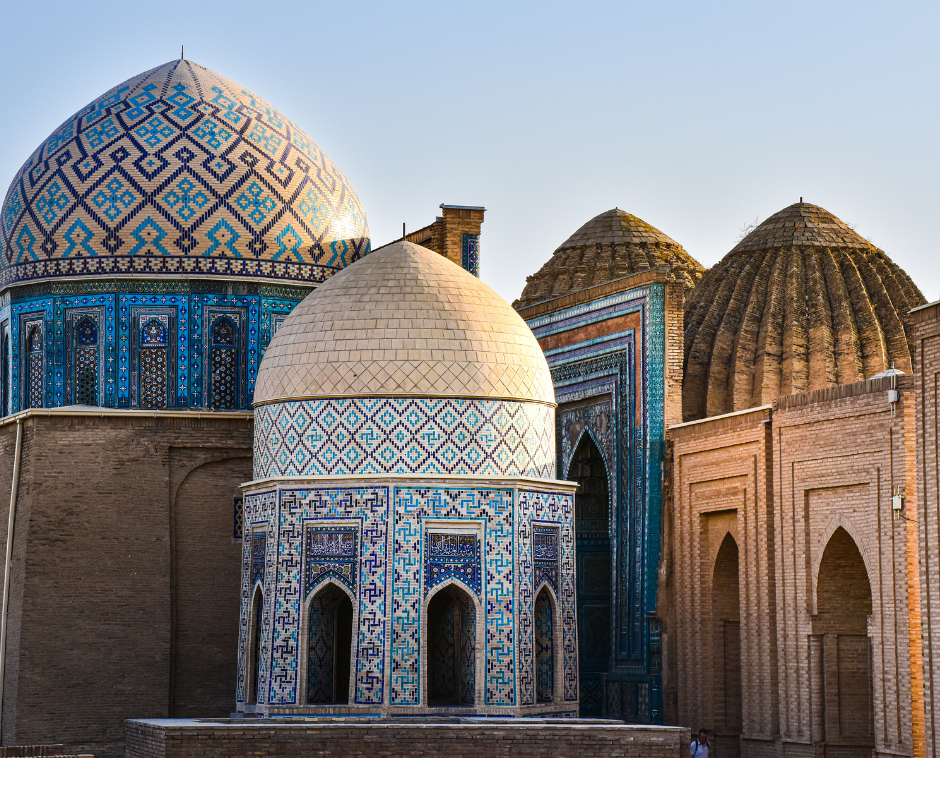
Shakhi-Zinda is one of the most breathtaking and emotional sites in Uzbekistan. It is a long pathway of mausoleums decorated with turquoise tiles, calligraphy, and geometric mosaics that sparkle in sunlight — often called a “corridor of paradise.” The complex includes tombs of royal family members, saints, and scholars, including the supposed grave of Kusam ibn Abbas, cousin of Prophet Muhammad. Pilgrims visit this sacred site to pray, while tourists admire its stunning artistry and peaceful atmosphere. Walking through Shakhi-Zinda feels like stepping into a blue-tiled dream — a truly unforgettable experience.
17.
Meros Paper Mill
The Meros paper mill is a unique cultural experience where visitors learn how traditional Samarkand mulberry paper is made by hand — using ancient techniques passed down since Silk Road times. Local artisans demonstrate every step, from soaking mulberry bark to pressing and drying sheets naturally under the sun. Tourists can try hands-on papermaking and buy souvenirs such as handmade notebooks, paintings, and calligraphy paper. The peaceful countryside setting adds charm, making it a relaxing break from monuments. A visit here supports local heritage and helps keep a disappearing craft alive.
18.
Monument of Courage
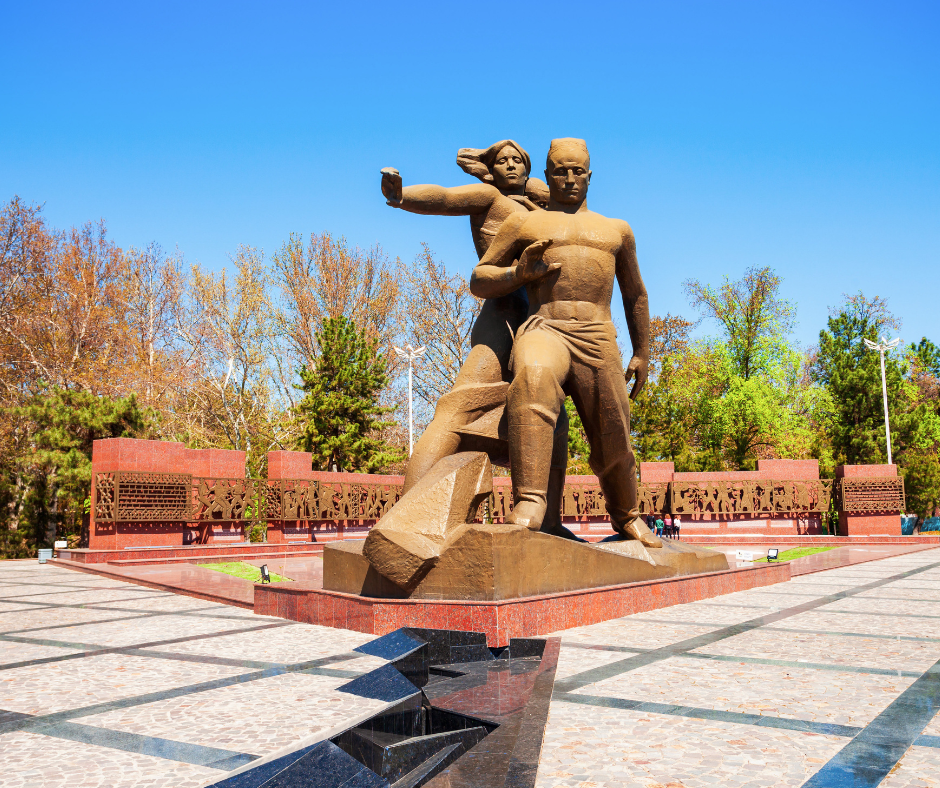
The Monument of Courage is a touching memorial dedicated to the victims of the devastating 1966 Tashkent earthquake, which destroyed much of the city in just seconds. The monument features a dramatic sculpture of a man shielding his family, symbolizing strength, unity, and the will to rebuild. Behind it, you’ll see a large black granite block cracked down the middle — representing the exact moment the ground split during the quake. Visiting this monument lets tourists understand how modern Tashkent rose from tragedy into the vibrant city it is today. It is deeply meaningful for locals, reminding them of resilience and humanity. Compared to other grand historical sites, the Monument of Courage offers a more emotional and personal connection to the city’s past, making it an important stop on any Tashkent tour.
19.
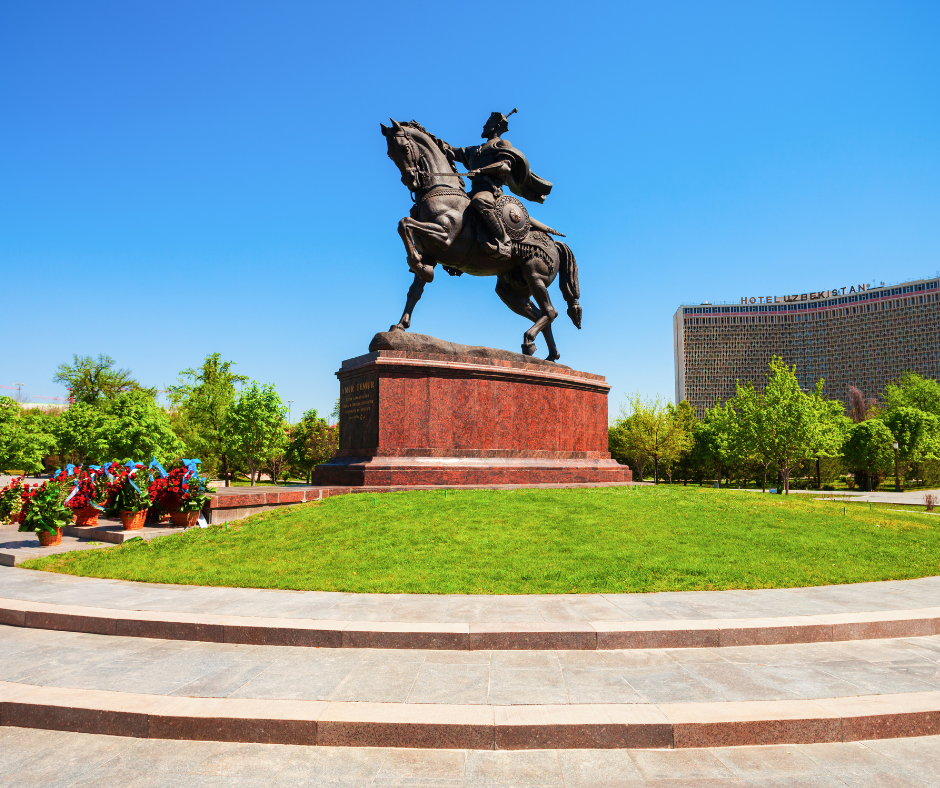
Amir Temur Square
Amir Temur Square is a lively hub in Tashkent dedicated to Amir Temur, also known as Tamerlane — the legendary conqueror who built a vast Central Asian empire. At the center of the square stands a powerful bronze statue of Amir Temur on horseback, with his iconic motto at the base: “Strength is in Justice.” The square is surrounded by significant buildings including the Uzbekistan Hotel, museums, and gardens that make it a popular stop for both tourists and locals. This is a wonderful place for photos and for learning about how Uzbekistan honors its historical leaders. As you stand here, imagine the Silk Road era, when Temur ruled cities, scholars, and armies that shaped history far beyond Central Asia. The energy here reflects national pride and historical greatness.
20.
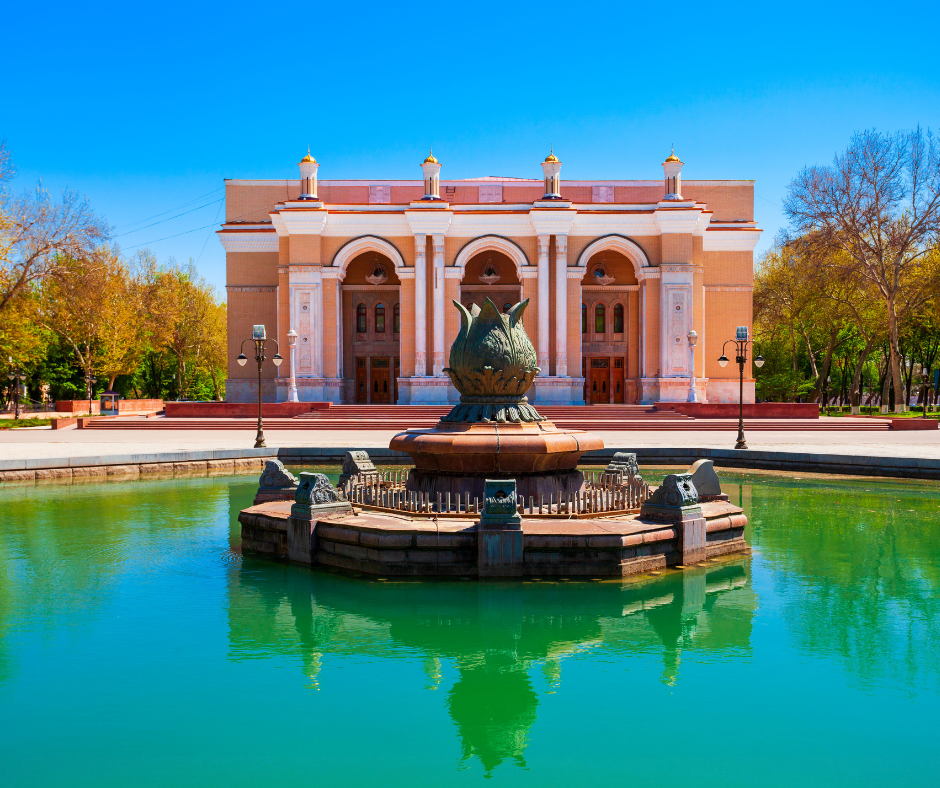
Alisher Navoi State Academic Bolshoi Theatre
The Alisher Navoi Bolshoi Theatre is one of Central Asia’s most prestigious cultural landmarks, named after Uzbekistan’s beloved poet Alisher Navoi. The theatre is a masterpiece of Soviet-era architecture blended with Uzbek artistic elements, featuring marble columns, gold interiors, and ornate ceilings. It hosts grand ballet and opera shows, sometimes performed by world-famous international troupes. Even from the outside, the building is spectacular — its symmetrical design and surrounding gardens make it a favorite photo stop for tourists. Guided tours are sometimes available for visitors to see backstage and learn about the theatre’s history, including how Japanese prisoners of war helped complete its construction after World War II. Whether you attend a performance or simply admire it from outside, this theatre showcases Uzbekistan’s cultural pride and artistic excellence.
21.
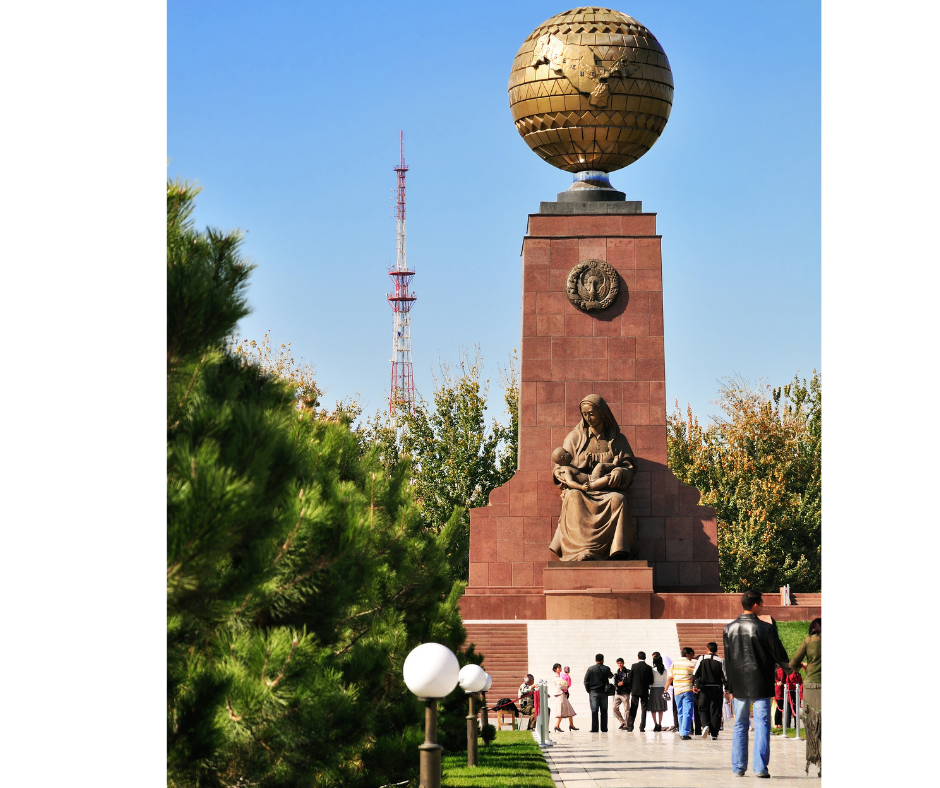
Independence Square
Independence Square is Uzbekistan’s most important public plaza, symbolizing freedom and the birth of the nation after gaining independence in 1991. The square is large, peaceful, and lined with trees, fountains, and elegant government buildings. Visitors enter through the Arch of Independence, topped with bronze storks symbolizing peace and new beginnings. In the heart of the square stands the Monument of Independence, featuring a golden globe that represents Uzbekistan’s place in the world. Many locals come here to walk, relax, take photos, and enjoy patriotic events on national holidays. As you tour the square, imagine its transformation from a Soviet administrative center into a celebration of Uzbek identity. It offers tourists a calm yet meaningful space to start learning about the country’s modern story and ambitions.
22.
Chorsu Bazaar
Chorsu Bazaar is one of the most vibrant markets in Central Asia, offering a lively taste of Uzbek daily life. Located beneath a massive green-blue domed roof, this historic bazaar is where locals come to buy spices, fruits, nuts, bread, traditional sweets, and fresh produce. Travelers can wander through colorful stalls, watch bakers preparing tandoor bread, and sample dried apricots, pistachios, and halva. It’s also a great place to shop for souvenirs including hand-embroidered textiles, ceramics, hats, and scarves. The atmosphere is energetic and authentic, filled with the sounds of bargaining and friendly greetings. A visit to Chorsu Bazaar is more than just shopping — it’s an unforgettable cultural experience where tourists see, smell, taste, and feel the true spirit of everyday Uzbek life.
23.
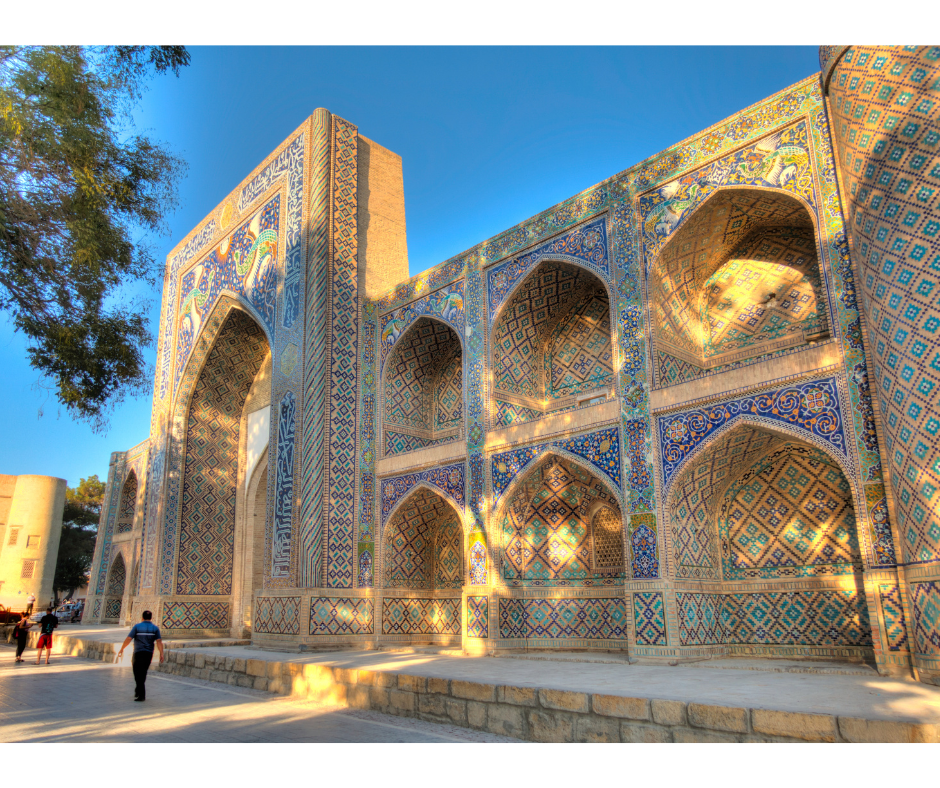
Lyabi-Khauz Ensemble
Lyabi-Khauz is one of Bukhara’s most enchanting gathering places, built around a traditional water reservoir framed by ancient trees and historic architecture. The name translates to “by the pond,” and for centuries, it has been a lively social hub where travelers, scholars, and merchants once met along the Silk Road. Today, it remains a favorite dining and relaxation spot filled with teahouses, outdoor restaurants, and traditional music — especially beautiful at night when lanterns reflect on the water. Surrounding monuments include the Nadir Divan-Beg Madrasah and Khanaka, stunning examples of Islamic artistry with grand facades and colorful tilework. Lyabi-Khauz is the perfect place for tourists to unwind after sightseeing, sip green tea, and enjoy the atmospheric charm of old-world Bukhara.
24.
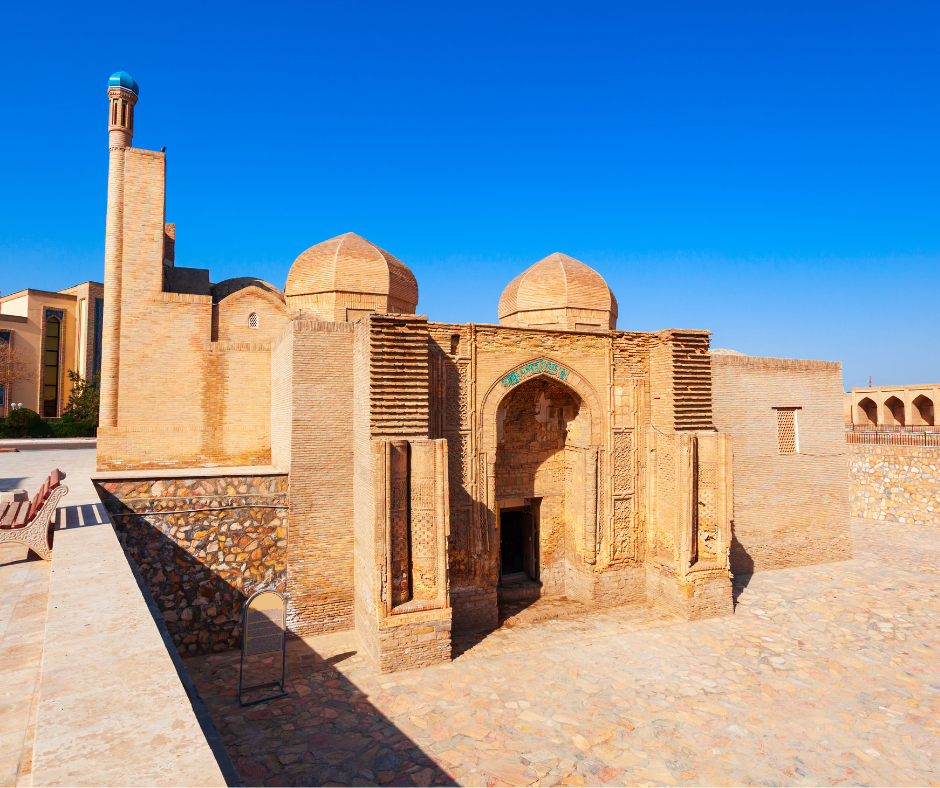
Magoki-Attori
Magoki-Attori Mosque is one of the oldest mosques in Central Asia, dating back to the 9th century, and it offers a fascinating window into Bukhara’s layered religious history. Its name means “deep-pit mosque” because centuries of rebuilding caused the ground around it to rise, leaving the mosque sunken below street level. Before Islam, this very spot hosted a Zoroastrian temple, showing how spiritual traditions evolved over time. The mosque’s walls feature ancient bricks and geometric carvings that reflect early Islamic architecture, making it a treasured monument for historians and photographers. Inside today, the mosque also functions as a carpet museum where visitors can view handmade Uzbek carpets and learn about local weaving traditions. Magoki-Attori is a small but unforgettable stop full of mystery, history, and cultural depth.
25.
Khast Imam Complex
The Khast Imam Complex is one of Tashkent’s most sacred religious and cultural sites, known as the heart of Islamic spirituality in Uzbekistan. Here, visitors can explore a peaceful square surrounded by exquisite mosques, madrasahs, and mausoleums dating back centuries. The highlight of the complex is the Muyi Muborak Madrasah, home to what is believed to be the world’s oldest Quran — the 7th-century Uthman Quran, written on deerskin. The architecture is breathtaking, featuring turquoise domes, carved wooden doors, and beautifully tiled facades that represent Uzbekistan’s Silk Road heritage. Travelers can enjoy a calm atmosphere perfect for reflection, photos, and learning about how Islam shaped Central Asian history. Visiting Khast Imam gives a deeper appreciation of Tashkent’s faith, history, and craftsmanship.
Packages starting from :
Standard Package
(3 Stars Hotel or equivalent)
7 Days 6 Nights
- 3 - 10 Pax : RM 3,499/Pax
- 10 - 20 Pax : RM 3,299/Pax
Packages starting from :
Standard Package
(4 Stars Hotel or equivalent)
7 Days 6 Nights
- 3 - 10 Pax : RM 3,999/Pax
- 10 - 20 Pax : RM 3,799/Pax