Oman Tour
(5 Days 4 Nights)
Embarking on an Exploration of Oman: A Journey Through Nature’s Marvels.
This journey through Oman showcases a blend of grand Islamic architecture, ancient history, dramatic mountain scenery, and authentic Bedouin culture. The itinerary includes iconic landmarks in Muscat, such as Sultan Qaboos Grand Mosque, Bait Al Zubair Museum, Al Alam Palace, and the bustling Muttrah Souq. Beyond the capital, it continues into historic villages, mountain oases, deep wadis, and high peaks including Jebel Shams, while introducing visitors to castles, souqs, traditional dhow craftsmanship, and desert camping experiences. Together, these experiences reflect Oman’s unique identity — peaceful, culturally rich, naturally stunning, and deeply connected to tradition.
01.
Sultan Qaboos Grand Mosque
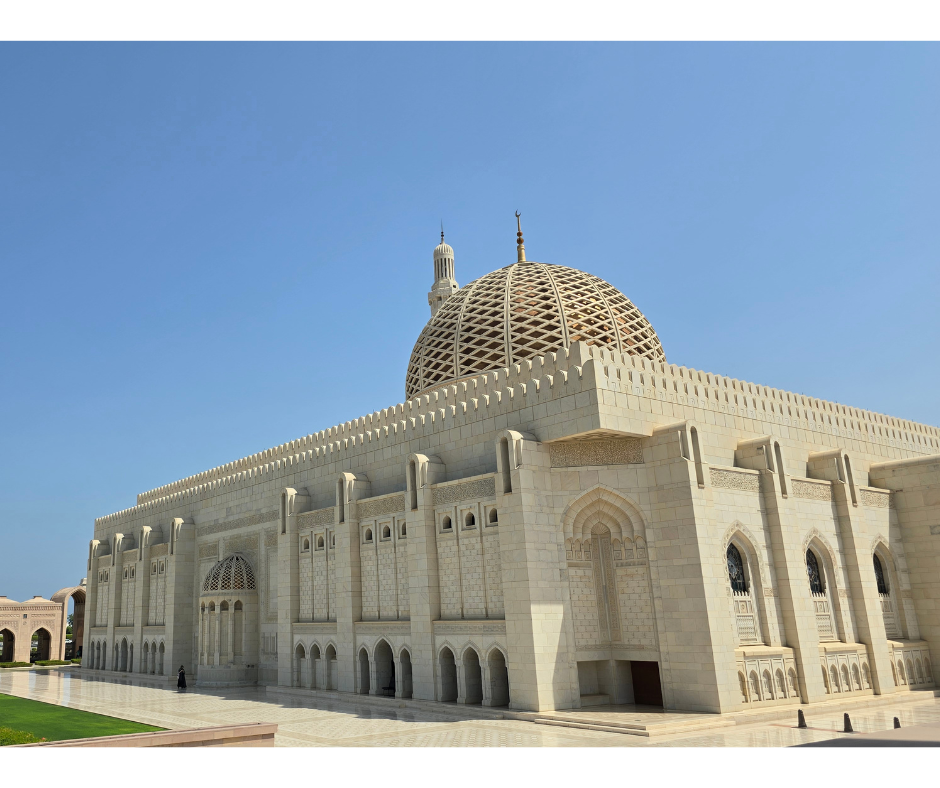
The Sultan Qaboos Grand Mosque in Muscat is one of Oman’s most breathtaking landmarks, known for its elegant architecture, peaceful ambiance, and spiritual significance. Completed in 2001, it was built as a gift to the nation by Sultan Qaboos and can accommodate over 20,000 worshippers. Its exterior features white marble façades, minarets, and landscaped courtyards, while inside you’ll find one of the world’s largest handwoven carpets and a stunning Swarovski crystal chandelier that once held the record as the biggest of its kind. Visitors walk across serene prayer halls lined with intricate Islamic patterns and Quranic calligraphy. This mosque represents both cultural pride and deep devotion, offering travelers a glimpse into the heart of contemporary Islamic architecture in Oman.
02.
Bait Al Zubair Museum
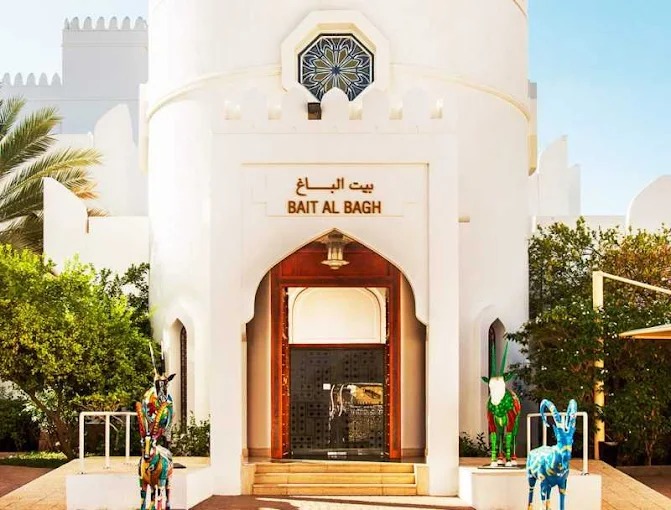
Bait Al Zubair Museum is a cultural treasure located in Muscat, offering visitors a chance to discover Oman’s rich heritage and traditions. Established by one of Oman’s oldest merchant families, the museum showcases artifacts such as traditional weapons, jewelry, costumes, pottery, old photographs, and household items that tell the story of Omani life over generations. Outside, the museum includes a recreated traditional Omani village and courtyard that transports visitors into the country’s past. Exhibits are thoughtfully curated to help guests understand Oman before its modern development — highlighting tribal history, maritime connections, and desert life. A visit here provides cultural depth and helps travelers appreciate the customs and identity that shape Omani society today, making it a meaningful stop beyond sightseeing.
03.
Al Alam Palace, Residence of Sultan Qaboos
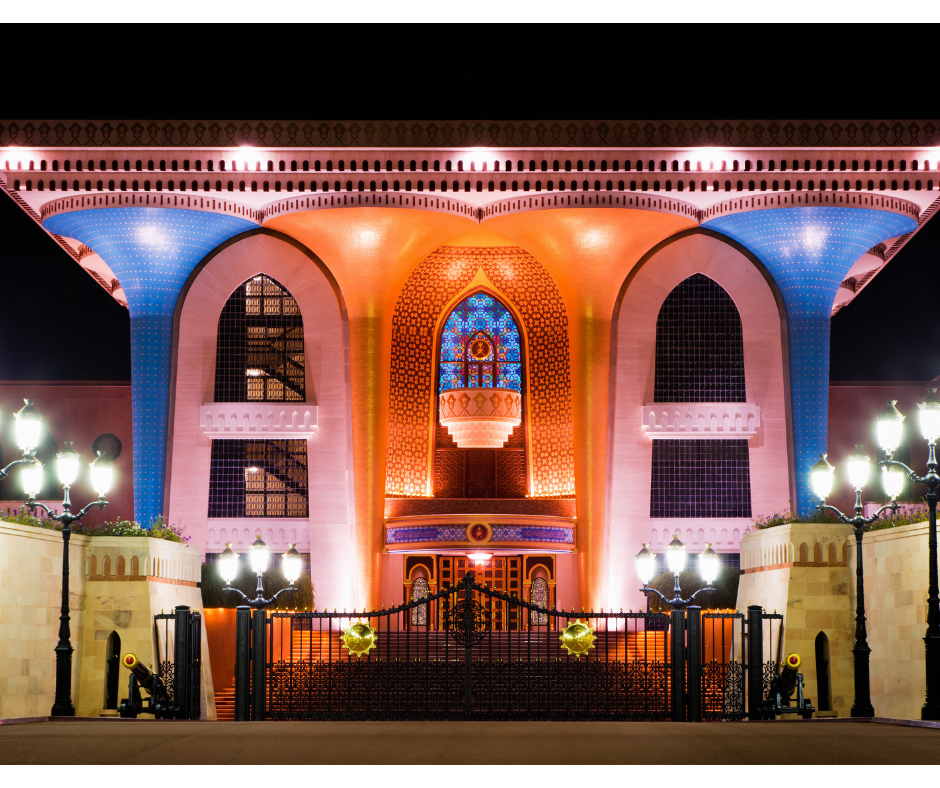
Al Alam Palace, meaning “Palace of the Flag,” is the ceremonial residence of His Majesty Sultan Qaboos and one of Muscat’s most photographed landmarks. While visitors cannot enter the palace, the photo stop outside is impressive — its bold blue-and-gold façade stands out dramatically against the surrounding mountains and historic Portuguese-built forts, Al Jalali and Al Mirani. The palace symbolizes Oman’s modern monarchy and is used for formal state ceremonies and welcoming foreign dignitaries. Guests typically enjoy strolling the grand walkway, taking photos framed by palm-lined gardens, and learning about the Sultan’s legacy and modernization efforts. This stop allows tourists to witness firsthand the balance between royal elegance, coastal beauty, and the timeless history that surrounds Oman’s capital.
04.
Muttrah Souq
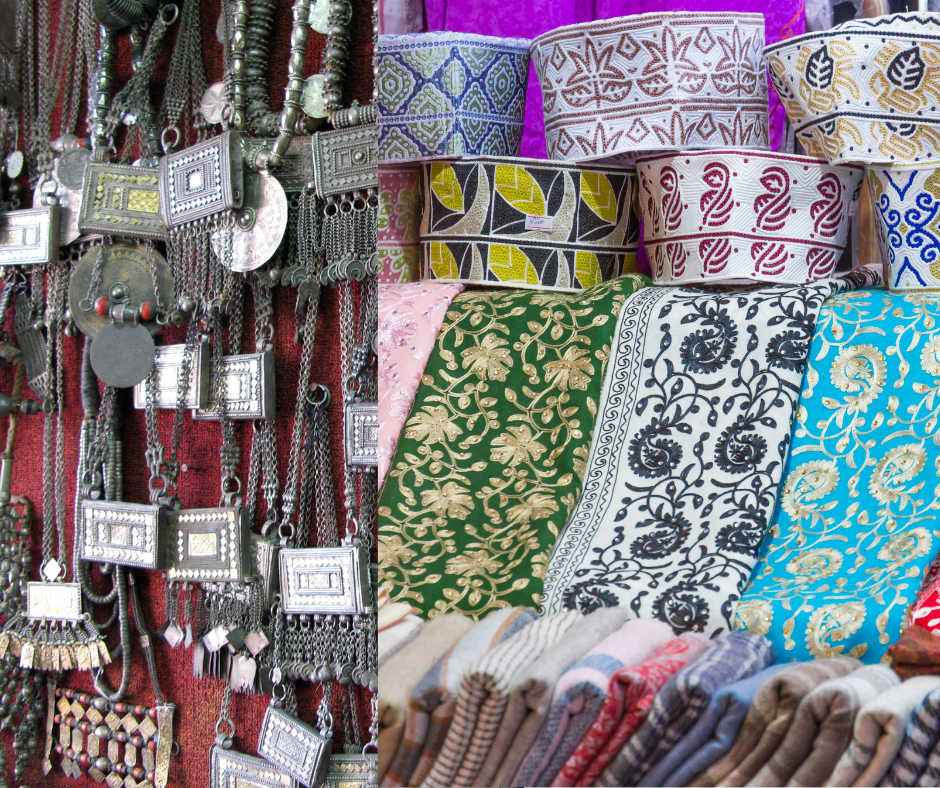
Muttrah Souq is one of Oman’s oldest markets, a vibrant maze of narrow alleyways filled with spices, incense, silver jewelry, pottery, scarves, and traditional Omani handicrafts. As you wander through, the scent of frankincense fills the air while friendly vendors showcase goods inspired by tribal heritage and maritime history. The souq is especially atmospheric in the evening, when lanterns illuminate shop fronts and the energy becomes lively. Popular items for visitors include khanjar (traditional Omani daggers), perfumes, dates, and handmade souvenirs. Walking through the souq is more than shopping — it is a cultural experience that reveals how ancient trade shaped Oman, connecting Arabia, India, and East Africa. It is a memorable place to interact with locals and feel the heartbeat of Omani everyday life.
05.
Birkat Al Mauz
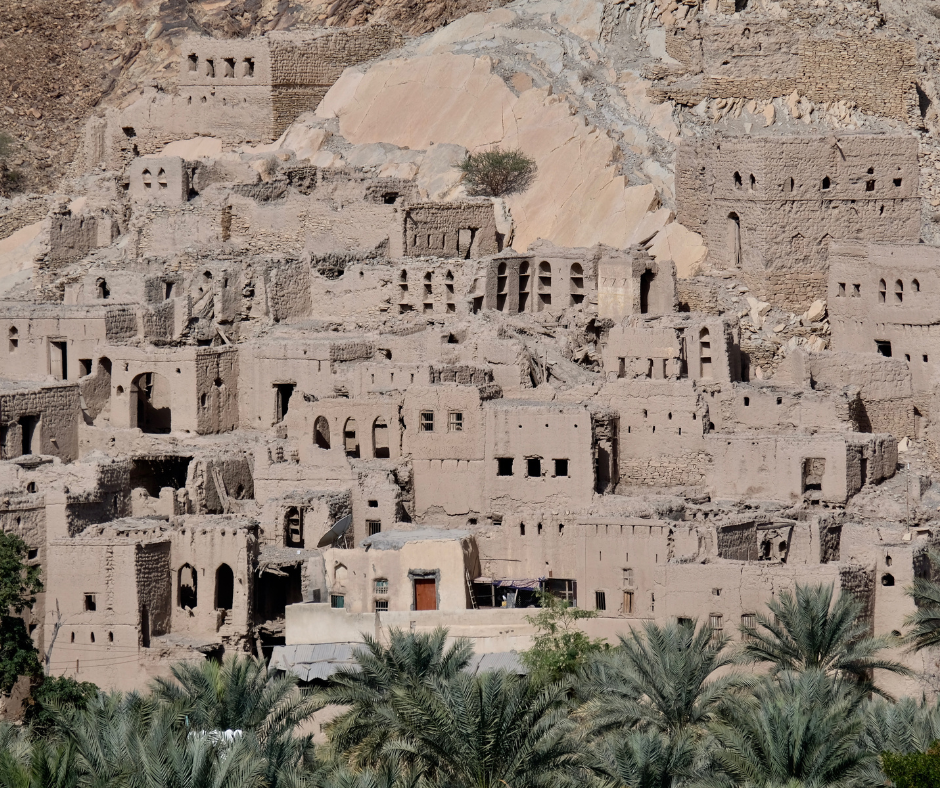
Birkat Al Mauz is a charming traditional village situated at the foothills of Jebel Akhdar, offering visitors a glimpse into rural Omani life. Its name means “Banana Pool,” and the village is known for date and banana plantations fed by ancient falaj irrigation systems, recognized as UNESCO heritage. Visitors can explore the abandoned mudbrick houses, walk scenic pathways shaded by palms, and admire mountain backdrops. The village is peaceful and slow-paced, giving time to appreciate how locals once lived in harmony with nature. The falaj channels running through the orchards also show how Oman mastered desert farming centuries ago. Birkat Al Mauz is a perfect stop for photos, cultural understanding, and a refreshing pause between mountain journeys.
06.
Jabrin Castle
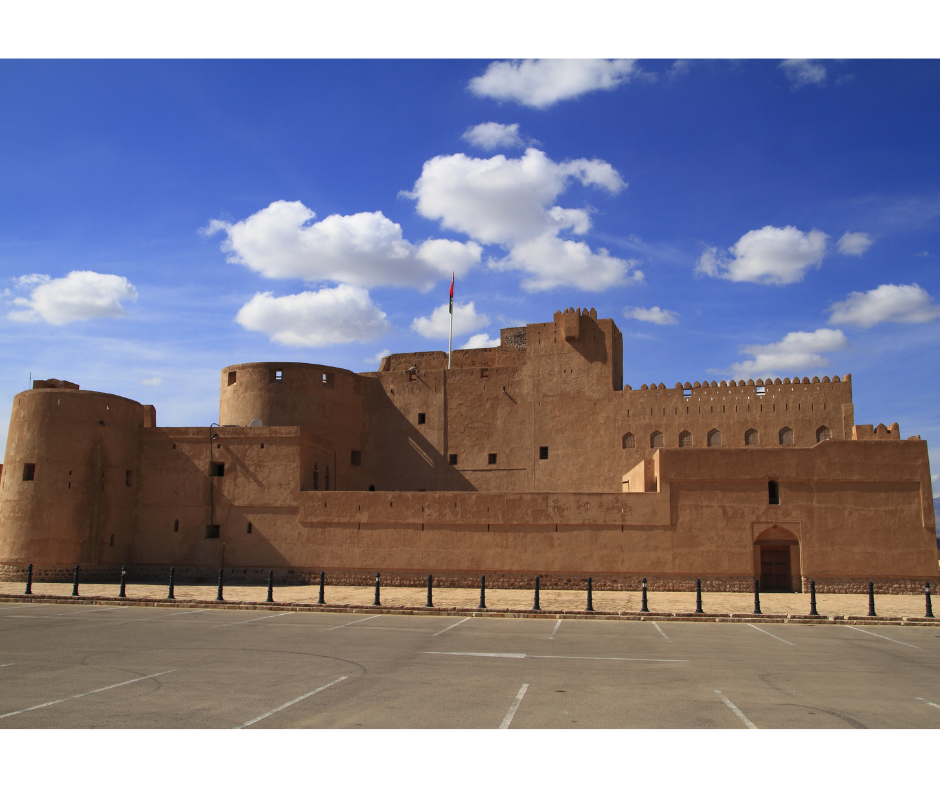
Jabrin Castle is one of Oman’s most beautiful and best-preserved castles, built in the 17th century by Imam Bil’arab bin Sultan. Unlike many defensive forts, Jabrin was designed as a place of education and intellectual life, featuring study halls, libraries, living quarters, and ornate painted ceilings. Visitors walk through narrow staircases, secret chambers, and roof terraces overlooking the desert landscape. Decorative inscriptions and Quranic verses adorn the interior, revealing the spiritual influence of the Imamate period. The castle also features traditional architecture such as wind towers for natural cooling. Touring Jabrin Castle is like stepping back into history — showing Oman as a center of scholarship, governance, and culture long before modern development.
07.
Misfah & Wadi Ghul
Misfah Al Abriyeen is a picturesque mountain village famous for its stone houses built into cliffs, offering panoramic views across palm-filled valleys. Visitors follow walking paths past orchards and falaj waterways, discovering Omani mountain life up close. Continuing to Wadi Ghul, often called the “Grand Canyon of Oman,” you’ll see dramatic terraced farms clinging to steep rock layers — a remarkable example of how Omani villagers cultivated crops in harsh environments. Both destinations showcase resilience, resourcefulness, and natural beauty, letting tourists slow down, breathe mountain air, and admire scenery shaped by time and tradition.

08.
Wadi Nakher & Jebel Shams
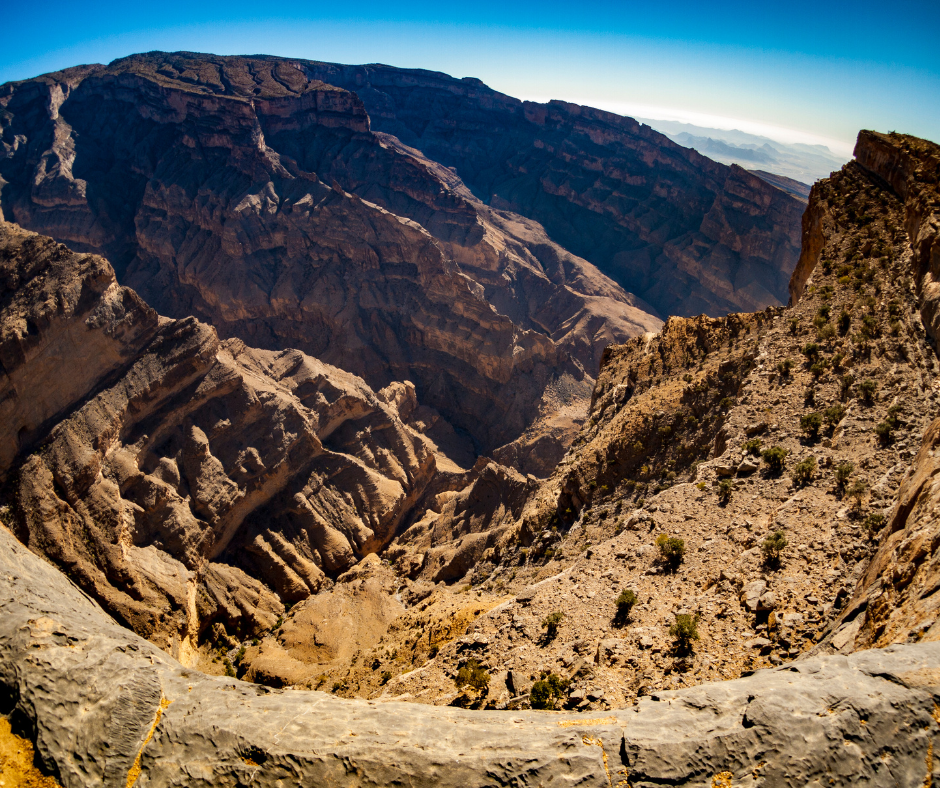
Wadi Nakher, often referred to as Oman’s deepest canyon, is a dramatic gorge carved by nature over centuries. Its towering cliffs make the journey unforgettable, especially for photography lovers. From there, the route continues to Jebel Shams — the “Mountain of the Sun” and the highest peak in Oman. At its viewpoint, travelers witness breathtaking vistas across rugged cliffs, steep drops, and endless mountain ranges. The cool air and quiet environment offer a refreshing escape from the city and desert. Visiting Wadi Nakher and Jebel Shams allows tourists to fully appreciate Oman’s incredible landscapes, where geology and natural forces created sights comparable to world-famous canyons.
09.
Nizwa Souq
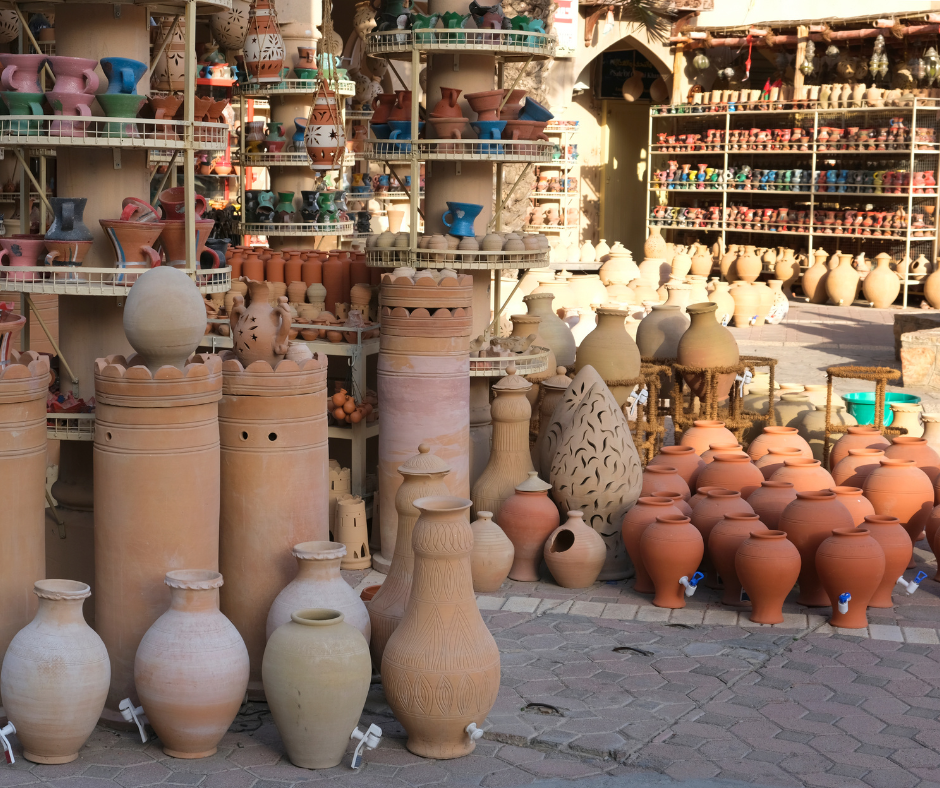
Nizwa Souq is one of Oman’s most famous traditional markets, located near the historic Nizwa Fort. It is known for its Friday goat market, pottery stalls, silver jewelry, spices, halwa sweets, dates, and handicrafts. Unlike modern malls, Nizwa Souq feels like stepping into a traditional Arabian bazaar, where bargaining still takes place and handcrafted goods reflect tribal identity. Visitors often enjoy sampling dates, smelling frankincense, and watching artisans at work. The souq is a lively cultural space that highlights how commerce has shaped Oman’s inland communities. It is also an ideal spot to purchase souvenirs and observe daily life in one of the country’s oldest cities.
10.
Bedouin House & Wadi Bani Khalid, Desert Camp
Visiting a Bedouin house allows tourists to experience nomadic desert culture firsthand — how Bedouin families traditionally lived, made handicrafts, drank coffee, and shared stories under goat-hair tents. After this cultural visit, the journey continues to Wadi Bani Khalid, one of Oman’s most scenic wadis, famous for turquoise pools, lush palms, and canyon pathways. Many visitors enjoy swimming or relaxing by the water before heading toward the desert for a dune-driving adventure. As the sun sets, travelers arrive at a desert campsite to enjoy dinner under the stars, traditional music, and warm hospitality. This experience combines culture, nature, and adventure in one memorable day.
11.
Sur Dhow Factory
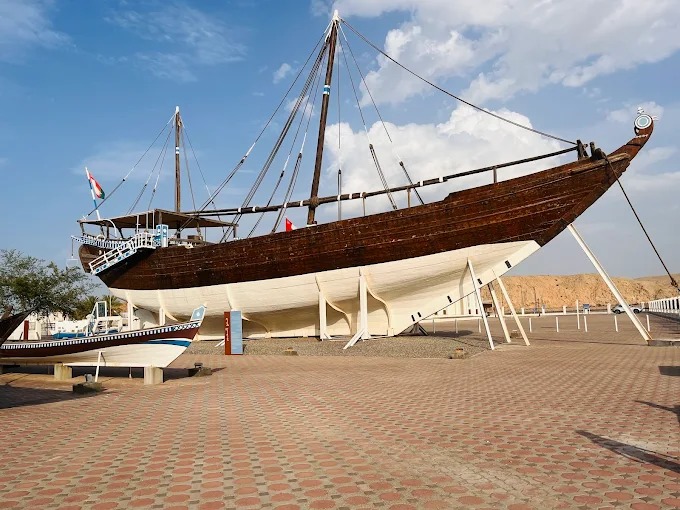
Sur is a coastal town known for its long shipbuilding tradition. At the Sur Dhow Factory, visitors watch craftsmen build wooden dhows — traditional Omani boats once used for trading with India and Africa. The process is still done largely by hand, using methods passed down through generations. Guests can explore the shipyard, see the tools, and appreciate the skill needed to bend wood into a seaworthy vessel. Sur itself offers scenic seaside views and a relaxing pace. Visiting the dhow factory helps travelers understand how Oman’s maritime history shaped its economy, culture, and international connections.
12.
Bibi Miriam Mausoleum – Qalhat
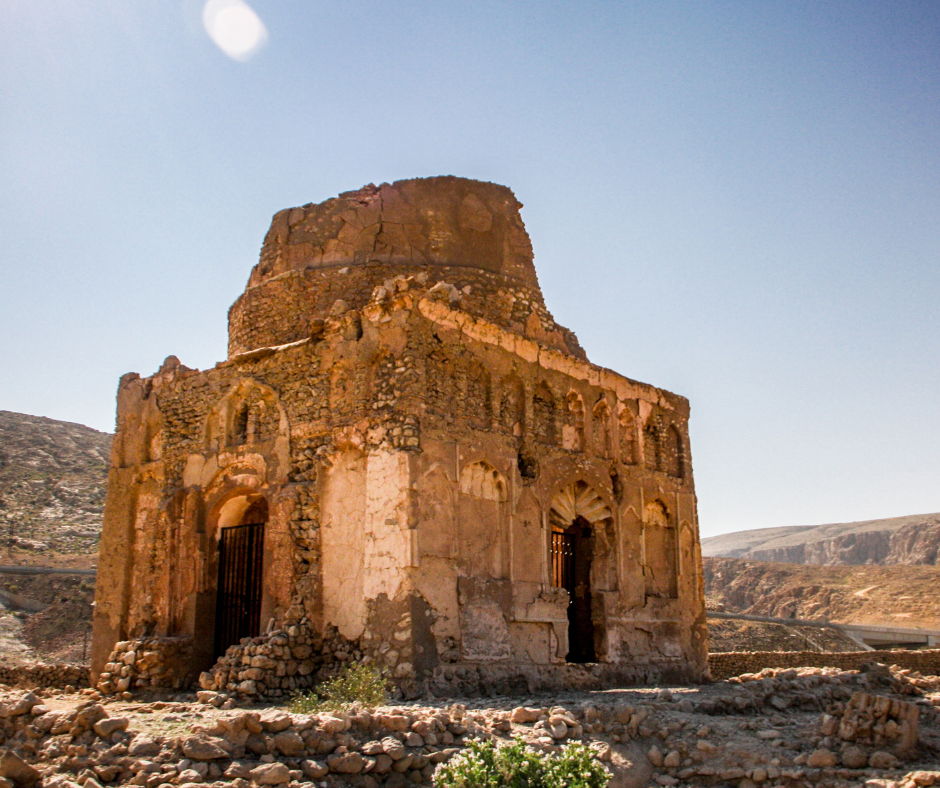
Bibi Miriam Mausoleum is one of Oman’s oldest and most mysterious Islamic structures, located near the ancient coastal town of Qalhat, a UNESCO World Heritage Site. The mausoleum stands alone on a hill overlooking the sea, surrounded by the ruins of what was once a thriving trade city visited by Marco Polo. Though only its white-cube structure remains, legend says it was built by a grieving ruler in honor of his beloved wife, adding emotional depth to the site. The quiet, windswept setting invites visitors to reflect on history, love, and the rise and fall of civilizations.
13.
Wadi Tiwi & Fins Beach
Wadi Tiwi is known as the “Wadi of Nine Villages,” where lush greenery, plantations of dates and lemons, and dramatic mountain cliffs create a stunning oasis. Visitors can walk along narrow roads through small villages, see falaj irrigation channels, and enjoy turquoise pools that make the wadi a refreshing stop. After exploring nature, the journey continues to Fins Beach, famous for its white-sand shoreline and crystal-blue water. It is a perfect place to relax, take photos, or have a picnic surrounded by natural beauty. The contrast between green oasis and white beach makes this stop especially memorable.
14.
Wadi Arbayeen & Bimah Sinkhole
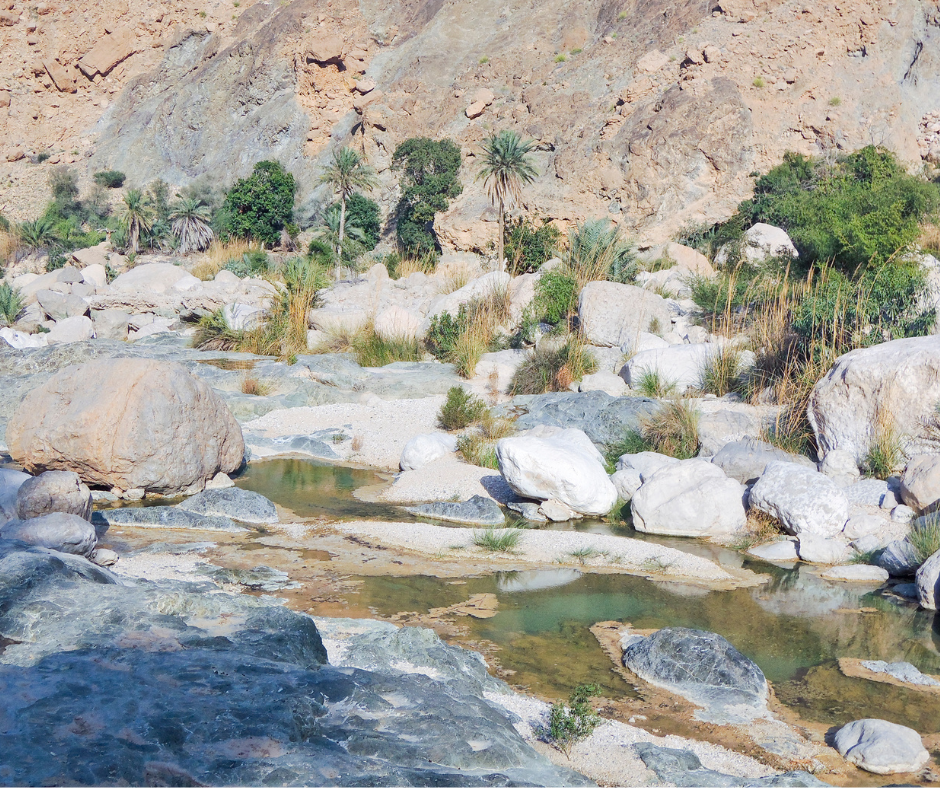
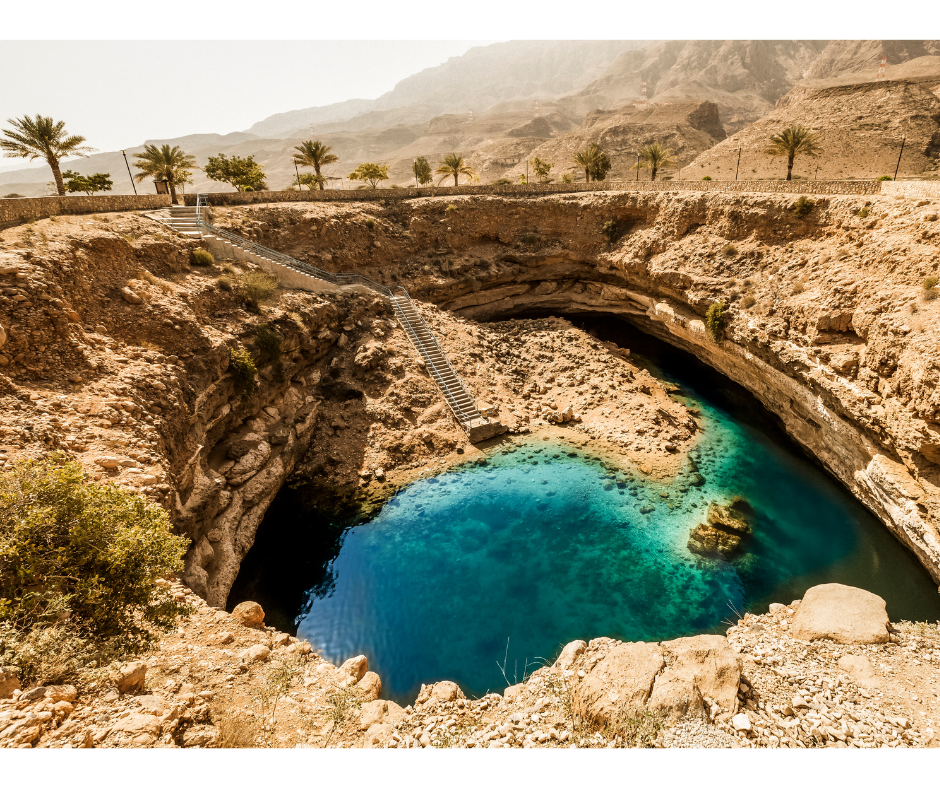
Wadi Arbayeen is a hidden natural gem featuring palm groves, sparkling pools, and dramatic canyons — ideal for travelers seeking unspoiled nature. The wadi’s deep pools invite swimming, while its landscape shows how water shapes life even in arid regions. The adventure continues at Bimah Sinkhole, a geological crater filled with bright turquoise water. Legend says it was formed when a meteor struck, though science suggests collapsed limestone caused the formation. Either way, it is one of Oman’s most photographed natural wonders. Together, Wadi Arbayeen and Bimah Sinkhole offer travelers the perfect balance of exploration, swimming opportunities, and striking scenery
Packages starting from :
Standard Package
(3 Stars Hotel or equivalent)
5 Days 4 Nights
- 4 Pax : RM 2,999/Pax
- 8 Pax : RM 2,899/Pax
Standard Package
(4 Stars Hotel or equivalent)
5 Days 4 Nights
- 4 Pax : RM 3,450/Pax
- 8 Pax : RM 3,350/Pax